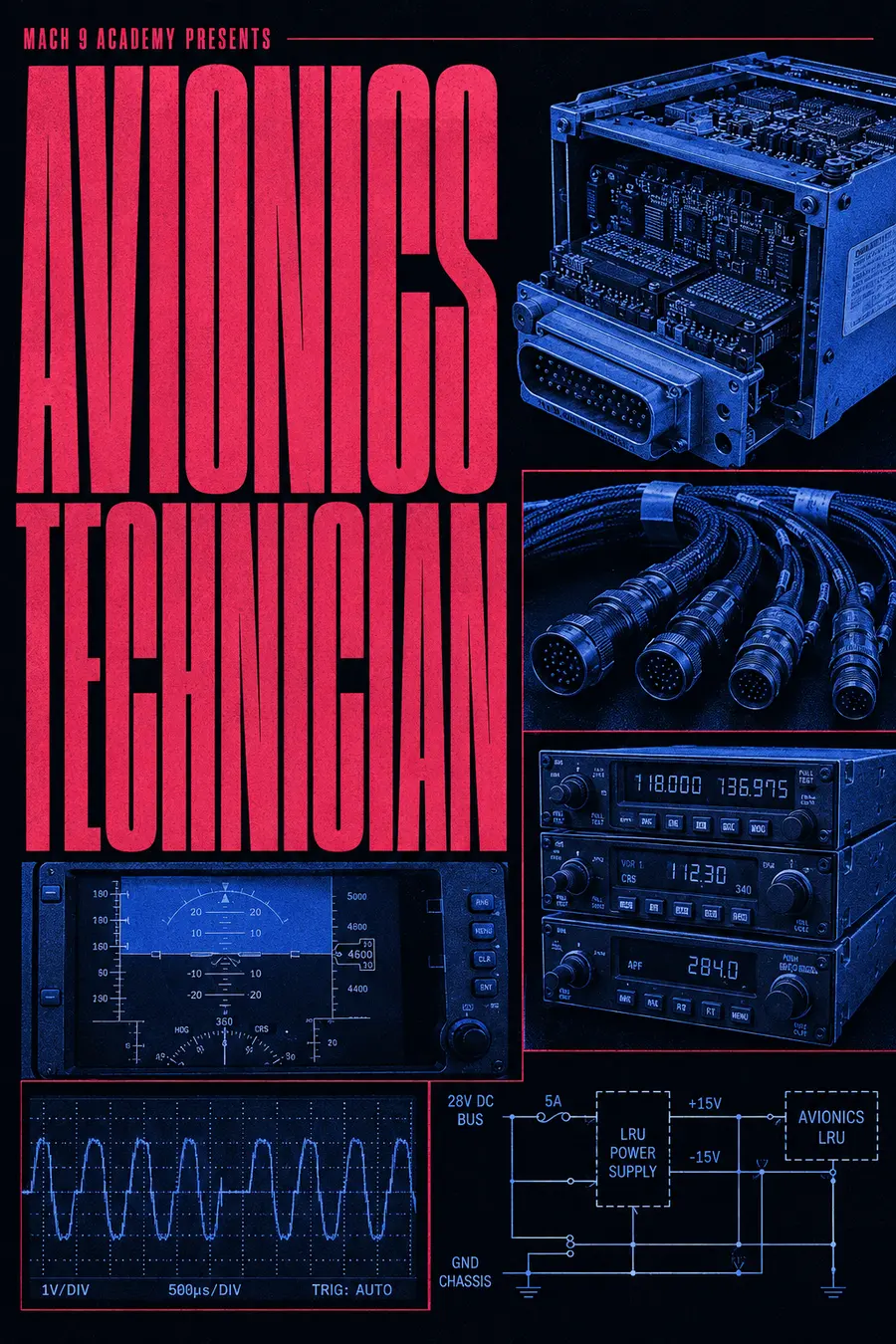
Installs, diagnoses and repairs the electronic systems an aircraft depends on.
The work
Avionics technicians work on the aircraft itself: navigation, communication, flight control electronics, wiring looms. It is a licensed trade with a clear ladder, and it does not require a degree.
A typical day
- 01Fault-find using schematics and built-in test
- 02Remove, replace and functionally check line units
- 03Certify work and complete the technical log
- 04Work nights, because that is when aircraft are on the ground
How people get in
- Apprenticeship
The main route. Paid from day one, with the licence earned along the way.
- Military
Service technical trades convert well into civil licences.
How it unfolds
- Years 1-3Apprenticeship or approved training, on aircraft, logged towards a licence.
- LicenceAvionics-specific, and the authority to certify the work.
- Years 4-8Type ratings, fault diagnosis, and modifications to specific systems.
- LaterCertifying staff, or design organisation work on modifications.
Is there a job in it
- Employed now
- 159,800
- Projected change
- +6% by 2034
- Openings a year
- 13,100
Aircraft and avionics equipment mechanics and technicians · US Bureau of Labor Statistics, Occupational Outlook Handbook, May 2024 wages and 2024–34 projections.
Published together with airframe and powerplant mechanics. The Handbook gives $81,390 for avionics technicians specifically.
The hard parts
Modern aircraft systems fail in ways that do not present cleanly, and you are expected to find the fault, not replace boxes until it goes away. Night shifts, and the aircraft is needed in the morning.
What you would need
- Electrical fault-finding
- Reading schematics
- Precision hand skills
- Documentation discipline
- Median pay
- $80,180
- Aircraft and avionics equipment mechanics and technicians, May 2024. US Bureau of Labor Statistics.
- Typical education
- Apprenticeship or technical certification (A&P / Part-66)
- Routes in
- Apprenticeship, Licence or certification, Military
- Field
- Aviation