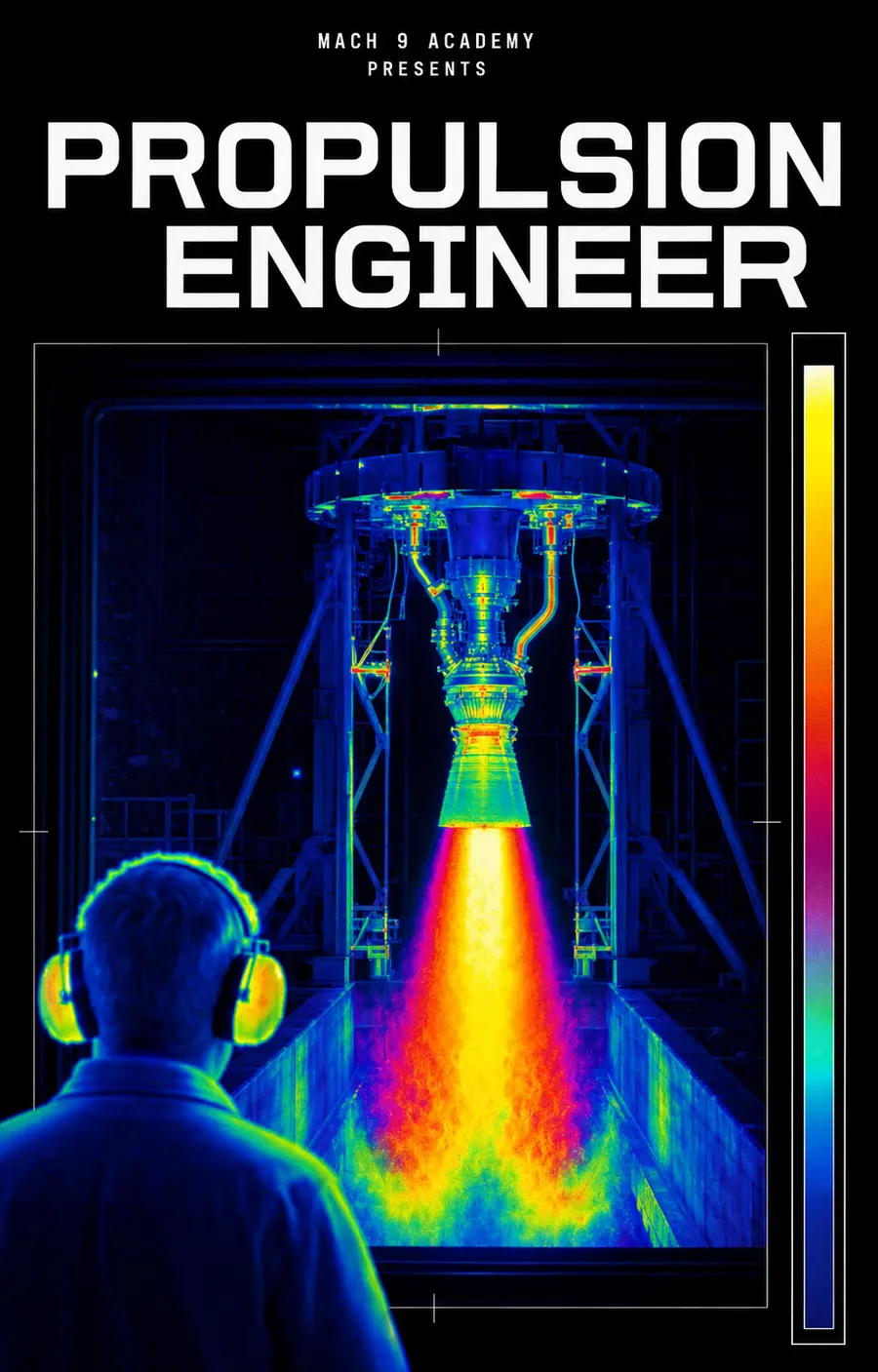
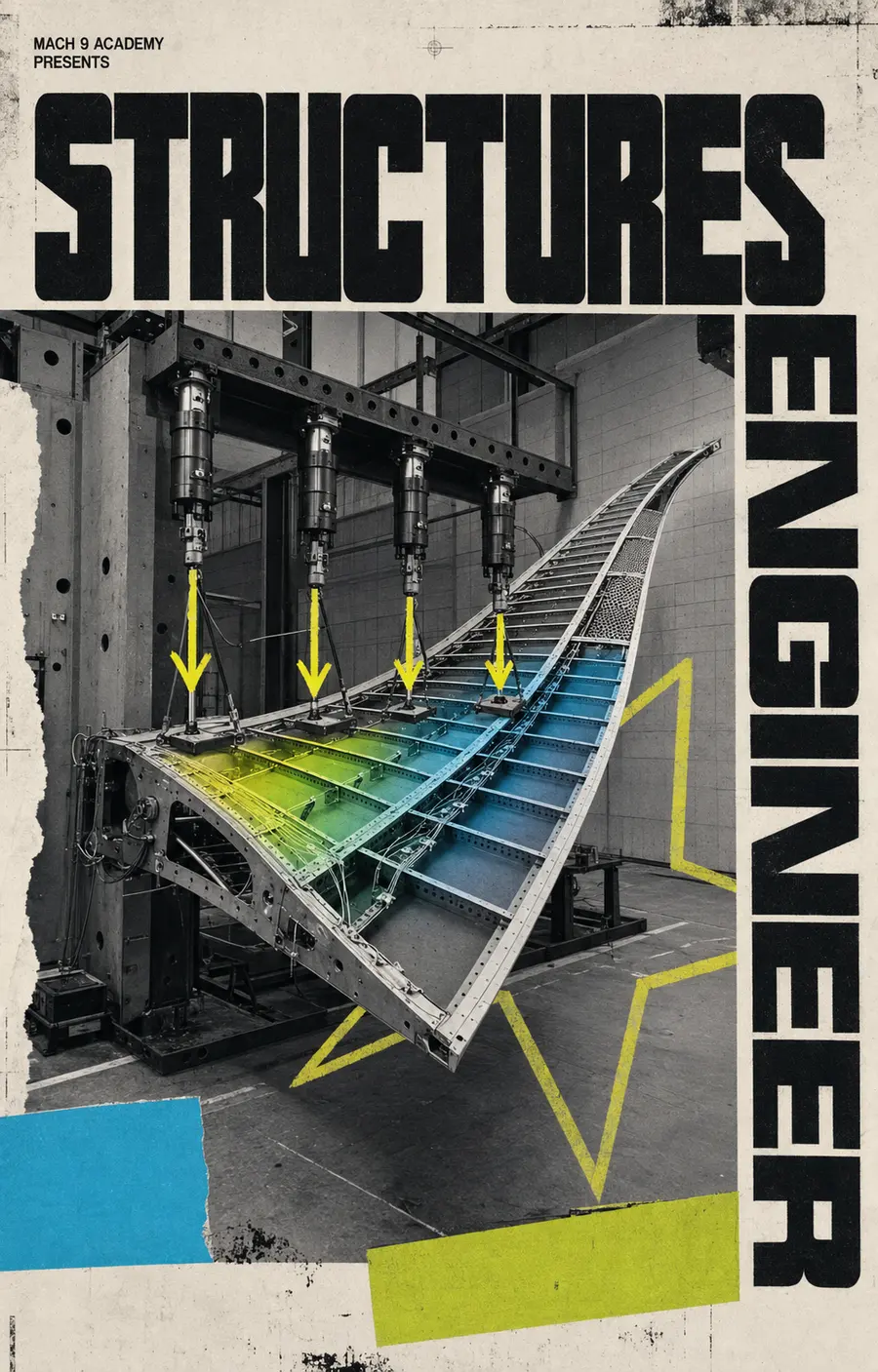
Designs and tests the vehicles that fly through atmosphere and vacuum.

The work
Aerospace engineers are responsible for a vehicle actually working: the shape of a wing, the load path through a structure, the margin between what a part will see and what it can take. Most of the job is analysis, review and test, the drawing is the easy part.
A typical day
- 01Run and interpret structural or aerodynamic analysis
- 02Review drawings and sign off on design changes
- 03Write and witness test procedures
- 04Argue about mass budget in a room full of people who all want more
How people get in
- Engineering degree
The common route. Aerospace, mechanical or civil all work; internships matter more than the exact title.
- Military service
Technical trades transfer well, and several employers fund the degree afterwards.
How it unfolds
- DegreeAerospace or mechanical, with placements that matter more than the title.
- Years 1-3Analysis and detail design under supervision, and a great deal of reading.
- Years 4-8Owning a structure or a system, signing your own work, and arguing about mass.
- LaterPrincipal, chief engineer, or across into flight test or programme management.
Is there a job in it
- Employed now
- 68,700
- Projected change
- +8% by 2034
- Openings a year
- 3,800
Aerospace engineers · US Bureau of Labor Statistics, Occupational Outlook Handbook, May 2024 wages and 2024–34 projections.
The hard parts
The mass budget is always spent and somebody always needs more, which means saying no to colleagues repeatedly. Certification work is slow and exacting and nobody outside the industry thinks it is interesting. Programmes get cancelled, and years of good work can go with them.
What you would need
- Statics and dynamics
- Fluid mechanics
- CAD and FEA
- Technical writing
- Median pay
- $134,960
- Aerospace engineers, May 2024. US Bureau of Labor Statistics.
- Typical education
- Bachelor's in aerospace or mechanical engineering
- Routes in
- Degree, Military
- Field
- Aerospace