The discipline underneath every machine that works, and every one that failed.
03, Engineering
Engineering is the discipline of being wrong on paper before you are wrong in the air, and of knowing exactly how much margin you have left.
Engineering is the practice of turning a requirement into a physical thing, and then proving it will hold. Materials, tolerances, manufacturing, testing, failure analysis. It is less about invention than about judgement under constraint, which is a skill, and can be taught.
What almost everybody thinks
“A safety factor of 1.5 means the part is 50% stronger than it needs to be.”
What is actually going on
It means the analysis, the material and the manufacturing are each uncertain, and 1.5 is what covers the accumulated uncertainty. Spend it on optimism and it is no longer there when you need it.
Machines that show it
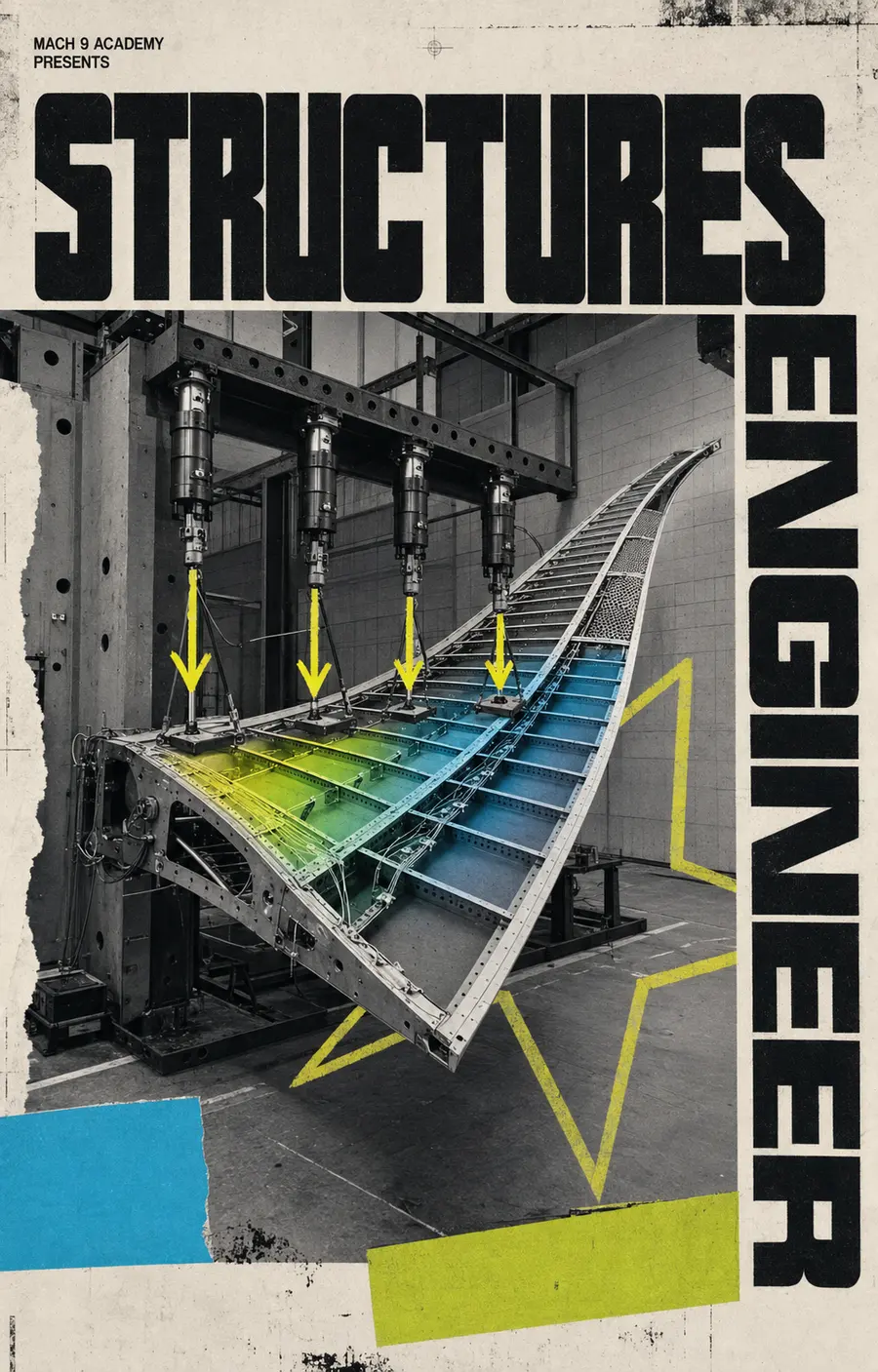
- The wing static test rigPulls a wing to 150% of the worst load it should ever see, and holds it there.
- The fatigue tankPressurises and depressurises a fuselage tens of thousands of times, on the ground, in water.
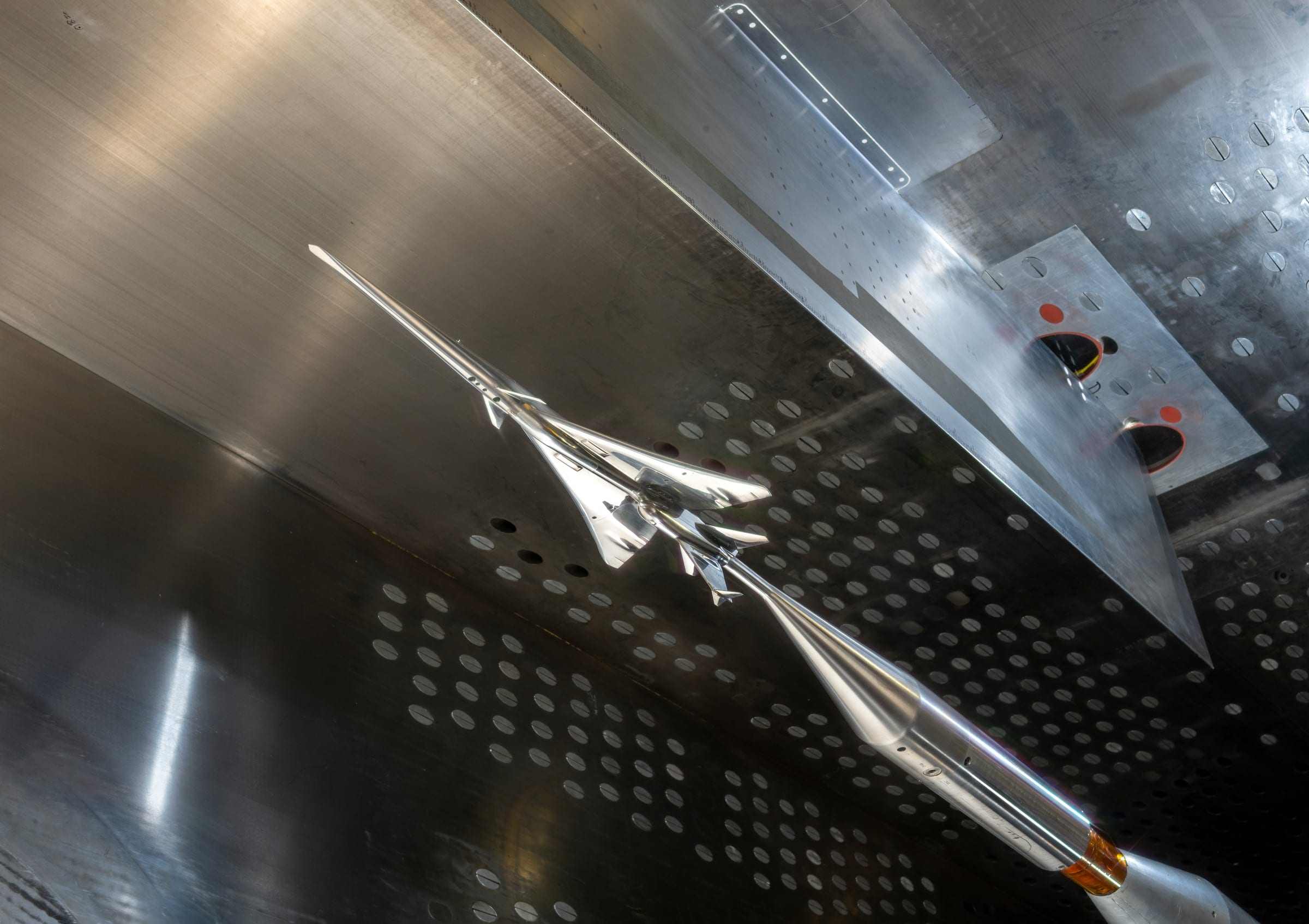
- The wind tunnelA model on a sting, and a balance measuring forces smaller than the model weighs.
- The coordinate measuring machineAnswers the only question production really asks: is it the shape the drawing said?
How it got here
- 1856Cheap steelThe Bessemer process turned a precious metal into a structural one, and made almost every machine after it possible.
- 1943Systems, not partsWartime production forced the idea that a design is a set of interfaces, not a set of drawings.
- 1954FatigueThe Comet accidents proved that a structure can be strong enough and still fail, because loads repeat.
- 1960sFinite elementsAerospace stress problems drove the method that now underpins the analysis of nearly everything built.
- 1986Margins are organisationalThe Challenger review made it plain that a technical margin is only as real as the process willing to defend it.
What you can learn here
Topic pages are being written, these are the first five
- 01
Choosing what it is made of
How do engineers pick materials?
Strength-to-weight, stiffness, fatigue, corrosion, cost. Why aluminium, why titanium, why increasingly composite.
- 02
Nothing is ever exactly the right size
What is a tolerance?
Fits, clearances, stack-up, and how a drawing communicates the difference between important and not.
- 03
Reading a failure
How do you find out why something broke?
Fracture surfaces, root cause, and the investigative culture that makes an industry safer after every accident.
- 04
Making more than one
How are aircraft parts made?
Machining, forming, additive, composite layup, and why the way a part is made changes how it is designed.
- 05
Systems engineering
Who makes sure the parts fit together?
Requirements, interfaces, verification. The unglamorous discipline that decides whether a big project works.
Where this leads
Everything on Mach 9 is connected in both directions. A concept leads to the people whose job it is, and a job leads back to what you would need to learn.
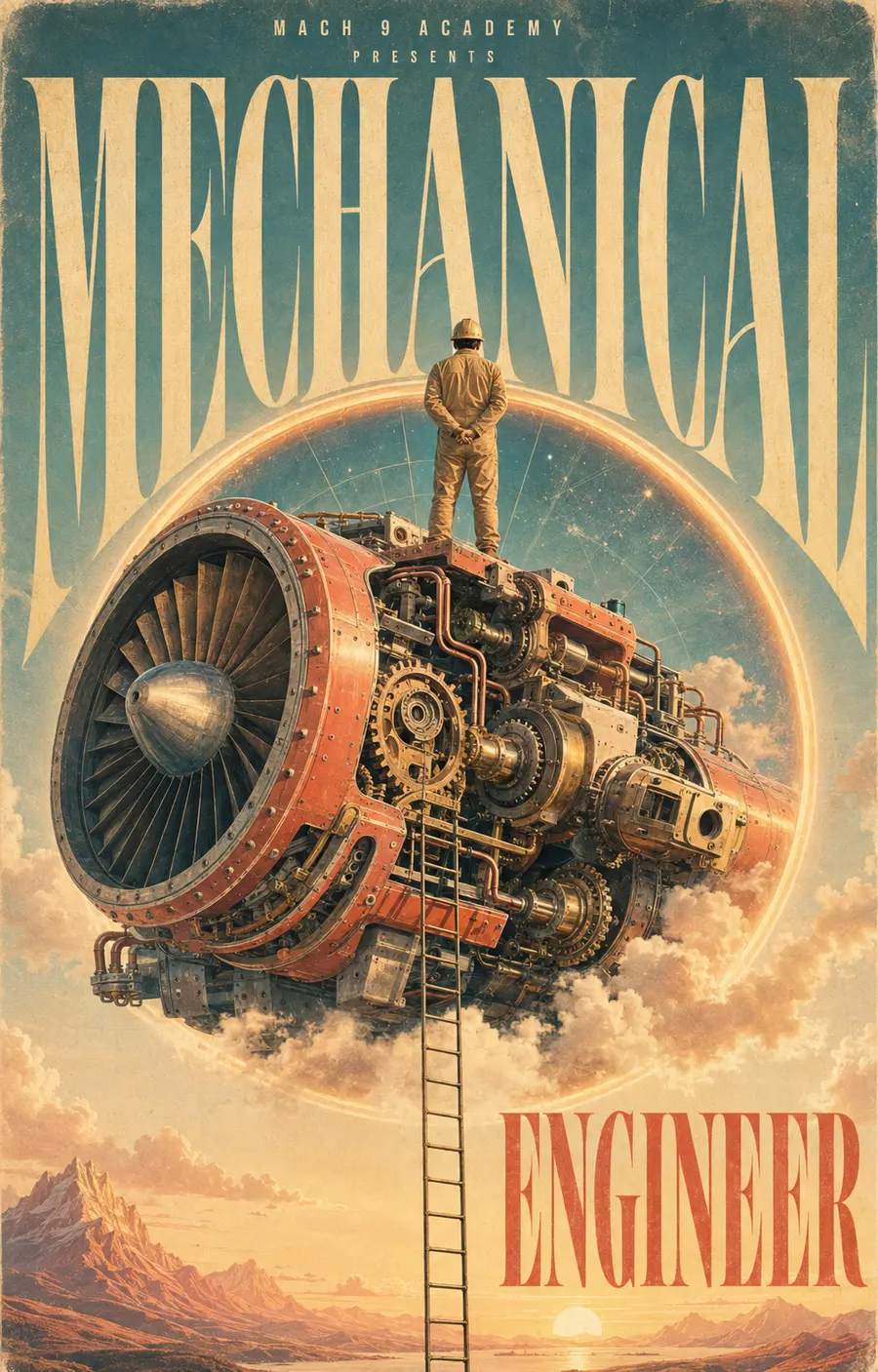
- CareerMechanical EngineerDesigns the moving, loaded and heated parts of almost everything.
- CareerStructures EngineerMakes sure the thing holds together under every load it will see.
- CareerMaterials EngineerChooses and characterises what things are made of, so parts survive heat, load and time.
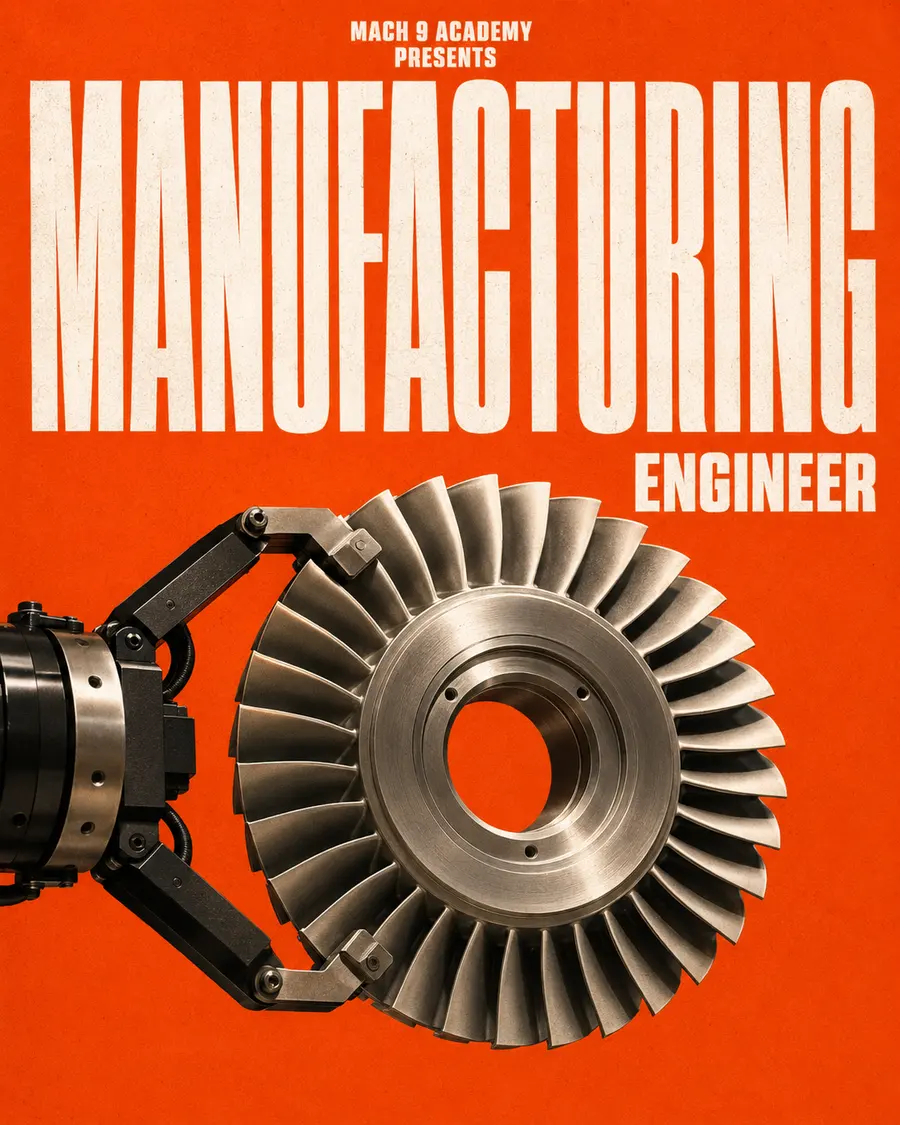
- CareerManufacturing EngineerWorks out how a design gets built, repeatably and on time.
 USCG / Kimberly ReevesBriefingOne loose wire, one bridge, six livesA single mislabelled wire, installed years before the ship ever sailed, is what the NTSB traced the Key Bridge collapse back to.
 Colin Brown, CC BY 2.0BriefingA safeguard built for a failure nobody expected to happen at onceTwo aluminium lugs were built to back each other up if one ever cracked. Investigators testified in May 2026 that both failed at the same time, exactly the scenario the design was never tested against.