Careers · Aviation
Sequences and separates aircraft in real time. No degree required.
The work
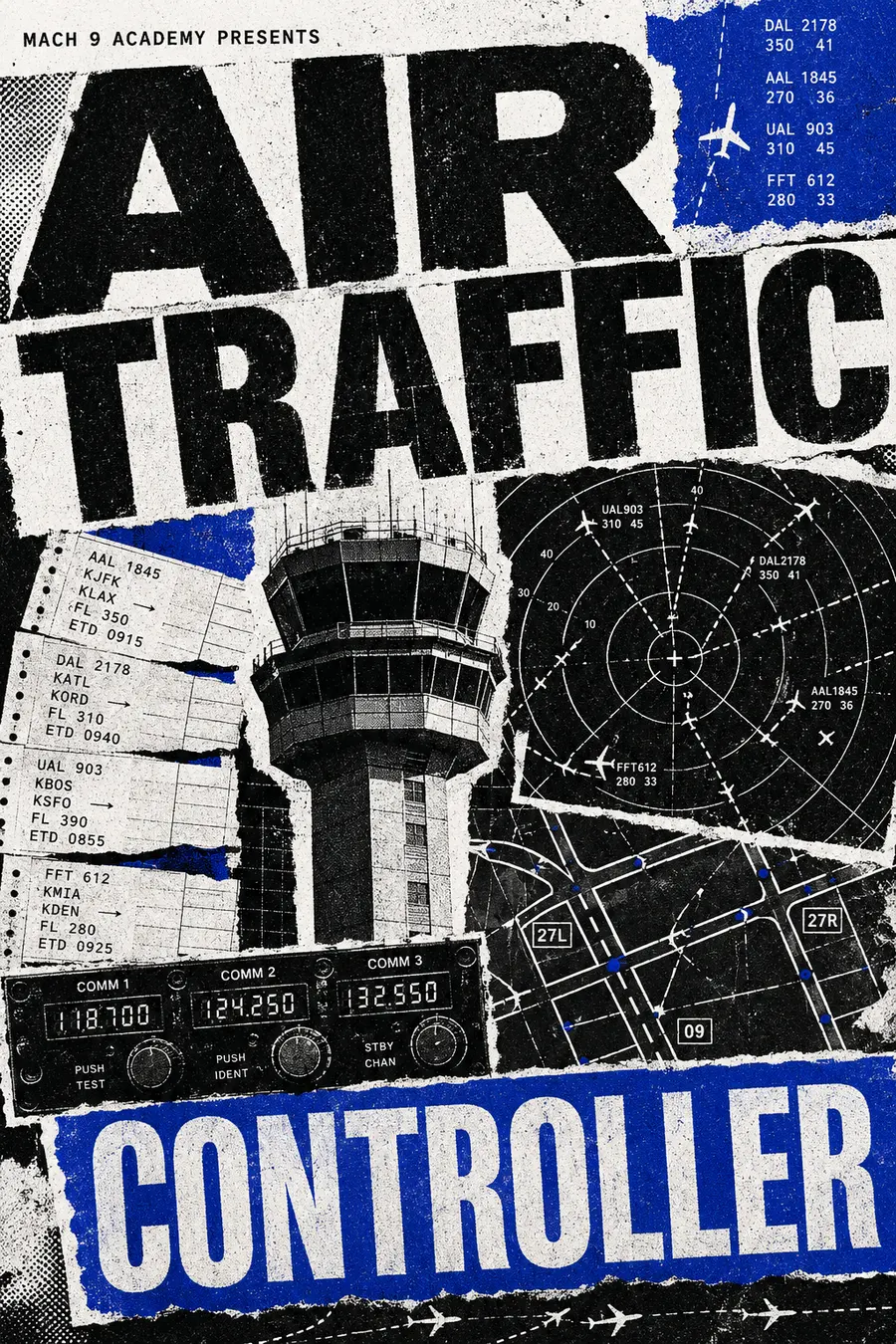
Controllers hold a live three-dimensional picture of their sector and keep everything in it apart, moving and on time. Selection is demanding and training is paid; the qualification is a licence, not a degree.
A typical day
- 01Work a sector position for defined periods with mandated breaks
- 02Issue clearances and maintain separation
- 03Coordinate handovers with adjacent sectors
- 04Manage weather, emergencies and traffic flow
How people get in
- Provider academy
Apply directly, pass aptitude testing, train on salary. Age limits apply in most countries.
How it unfolds
- SelectionAptitude testing with a low pass rate. It measures things you cannot revise for.
- TrainingA year or more at a college, then live training under supervision at a unit.
- ValidationYou hold your own position. This is the point most people mean by qualified.
- LaterSecond and third ratings, on-the-job instructor, or supervisor.
Is there a job in it
- Employed now
- 24,000
- Projected change
- +2% by 2034
- Openings a year
- 2,100
Air traffic controllers · US Bureau of Labor Statistics, Occupational Outlook Handbook, May 2024 wages and 2024–34 projections.
The hard parts
The training washout rate is high and it happens after you have committed a year. Shift work covers the clock forever. The job is unbroken concentration in bursts, you cannot take a bad day home and you cannot take it into the next session either.
What you would need
- Spatial reasoning
- Short-term memory under load
- Clear radio discipline
- Decisiveness
- Median pay
- $148,080
- Air traffic controllers, May 2024. US Bureau of Labor Statistics.
- Typical education
- Provider academy plus on-the-job validation
- Routes in
- Licence or certification
- Field
- Aviation