Careers · Engineering
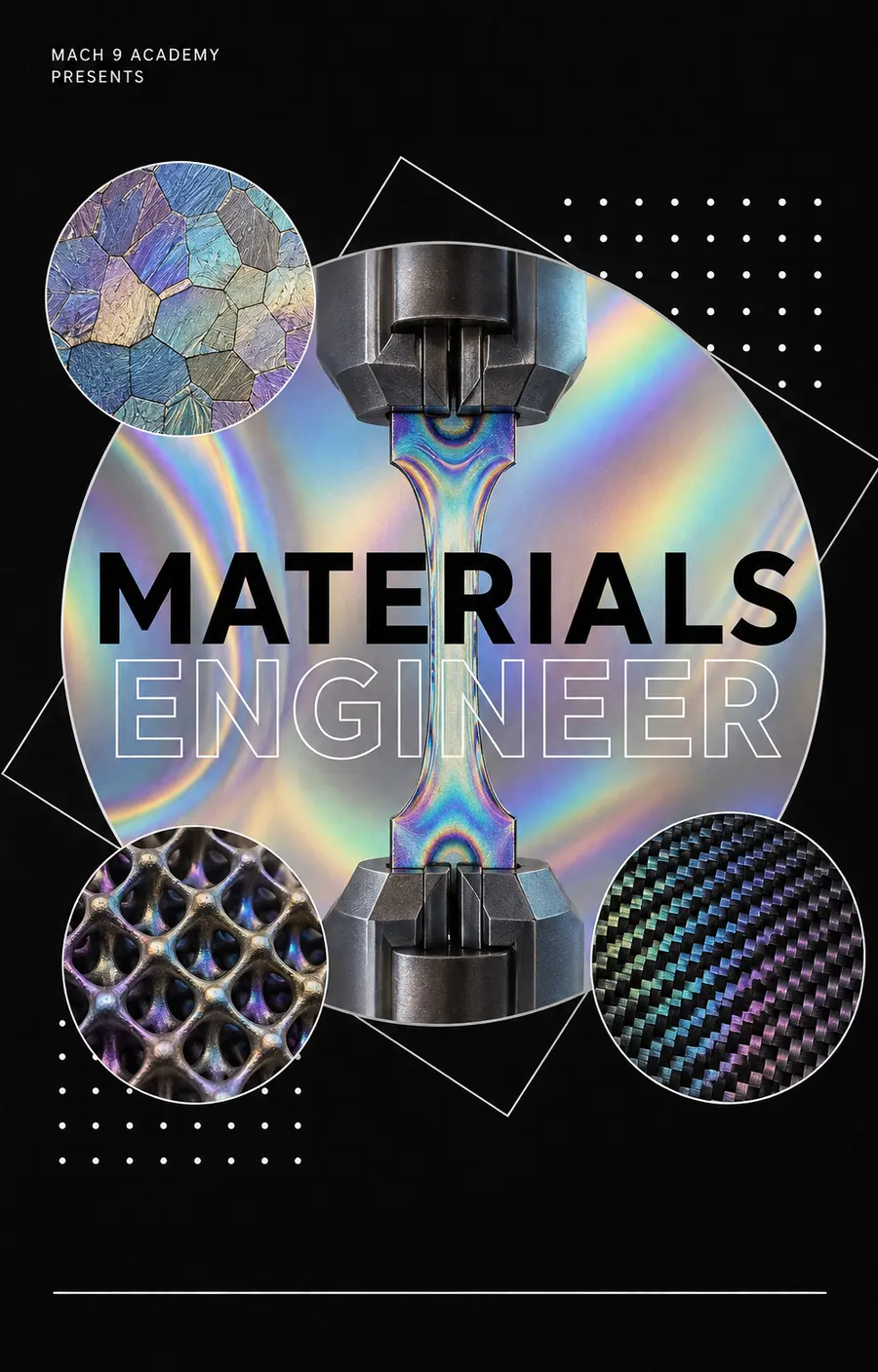
Chooses and characterises what things are made of, so parts survive heat, load and time.
The work
Materials engineers sit between chemistry and structures. They select alloys and composites, specify processing and heat treatment, run the coupon tests that generate allowables, and investigate parts that came back cracked.
A typical day
- 01Specify materials and processes for new parts
- 02Run mechanical and microstructural characterisation
- 03Investigate failures under a microscope
- 04Maintain the allowables database everyone else designs against
How people get in
- Materials degree
Materials science, metallurgy or an adjacent chemistry route.
How it unfolds
- DegreeMaterials science or metallurgy, usually with a masters for research work.
- Years 1-3Testing and characterisation. Coupons, microscopes, and a great deal of data.
- Years 4-8Selection and qualification: proving a material is fit for a specific job.
- LaterSpecialist in a class of material, or failure investigation.
Is there a job in it
- Employed now
- 23,800
- Projected change
- +8% by 2034
- Openings a year
- 1,300
Materials engineers · US Bureau of Labor Statistics, Occupational Outlook Handbook, May 2024 wages and 2024–34 projections.
The hard parts
Qualifying a material takes years and most of it is not glamorous. When something breaks in service you are the one working out why, which is interesting and comes with consequences attached.
What you would need
- Microstructure and phase behaviour
- Mechanical testing
- Corrosion and fatigue
- Statistics
- Median pay
- $112,860
- Materials engineers, May 2024. US Bureau of Labor Statistics.
- Typical education
- Bachelor's in materials science or metallurgy
- Routes in
- Degree
- Field
- Engineering