Careers · Aviation
Keeps a fleet, a crew roster and a schedule all working at once.
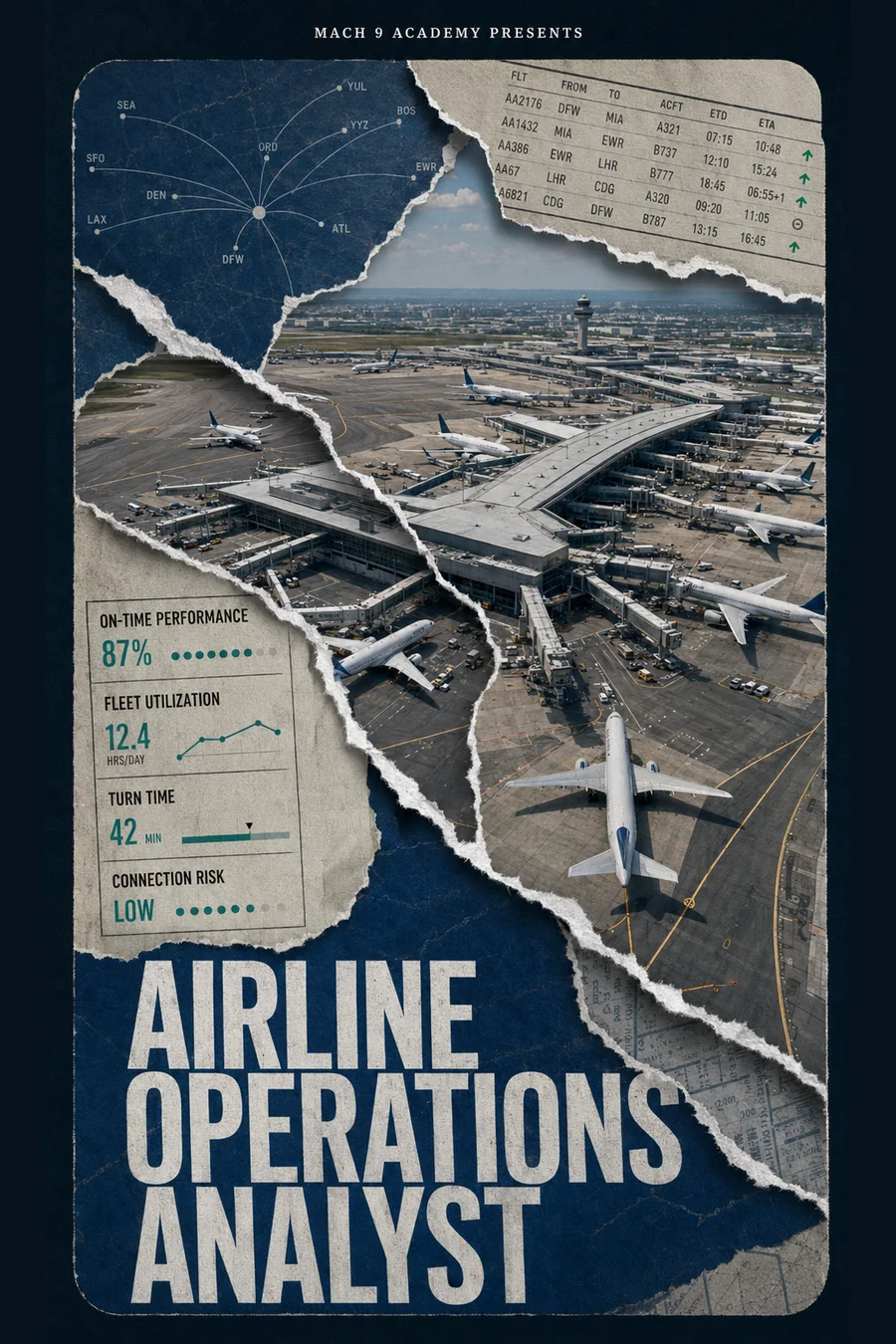
The work
Airlines are enormous optimisation problems that break every time the weather does. Operations analysts model, forecast and recover the network, a quantitative career in aviation that involves no engineering degree.
A typical day
- 01Model schedule and crew scenarios
- 02Support disruption recovery decisions
- 03Analyse punctuality, fuel and utilisation data
- 04Work with operations control on live problems
How people get in
- Quantitative degree
Maths, economics or data science; aviation knowledge is learned on the job.
How it unfolds
- DegreeOperational research, economics, engineering or maths.
- Years 1-3Reporting and modelling. Learning what the operation actually does versus what the plan said.
- Years 4-8Owning a model that a real decision depends on, and being asked to defend it.
- LaterHead of analysis, or into network planning.
Is there a job in it
- Employed now
- 113,100
- Projected change
- +12% by 2034
- Openings a year
- 7,500
Operations research analysts · US Bureau of Labor Statistics, Occupational Outlook Handbook, May 2024 wages and 2024–34 projections.
The hard parts
Your recommendation will sometimes be ignored for reasons that are not analytical, and sometimes those reasons are good. Being right and being persuasive are separate skills and the job needs both.
What you would need
- Optimisation
- Statistics
- SQL and Python
- Communicating with non-analysts
- Median pay
- $88,940
- Operations research analysts, May 2024. US Bureau of Labor Statistics.
- Typical education
- Bachelor's in mathematics, economics, data science or similar
- Routes in
- Degree, Licence or certification
- Field
- Aviation