Loading…
Careers · Aerospace
Decides, before and during a flight test or a launch, what happens if it goes wrong.
The work
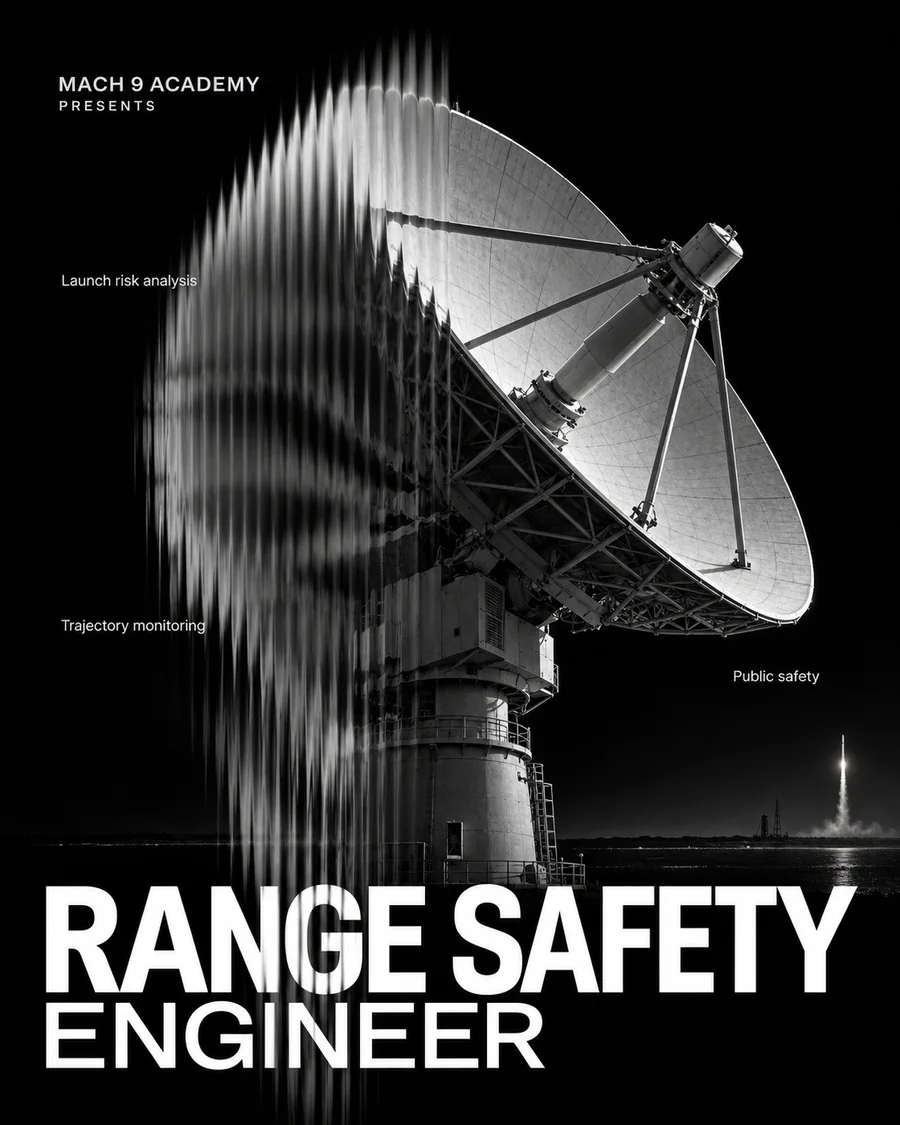
Every rocket launch and most flight test programmes fly over people who did not choose to be underneath them, which is what this job exists to manage. A range safety engineer analyses the trajectory, the failure modes and the debris footprint in advance, sets the destruct or termination criteria, and on the day, watches the vehicle against those limits with the authority to end the flight if it leaves the box it was cleared to fly in.
A typical day
- 01Model trajectories, failure modes and debris footprints before a flight
- 02Set the flight termination or destruct criteria a mission has to fly inside
- 03Coordinate exclusion zones with the range and, for launches, air and sea traffic
- 04Sit console during the flight with authority over its continuation
How people get in
- Aerospace engineering degree, then a launch or test site
Range safety is learned on top of an engineering degree, at a specific facility, rather than taught as its own major.
How it unfolds
- DegreeAerospace engineering, then several years elsewhere in the programme before moving into safety.
- CertificationRange safety training specific to the launch or test site, which is not taught in most degrees.
- Years 3-7Trajectory and debris analysis, building the destruct criteria for real missions.
- LaterConsole authority on launch day, and eventually lead range safety officer for a site.
Is there a job in it
- Employed now
- 68,700
- Projected change
- +8% by 2034
- Openings a year
- 3,800
Aerospace engineers · US Bureau of Labor Statistics, Occupational Outlook Handbook, May 2024 wages and 2024–34 projections.
Range safety is not tracked as its own occupation. The people who do it are almost always trained aerospace engineers, working inside the much larger figure the Handbook publishes for the discipline as a whole.
The hard parts
On launch day you may be the person with the authority, and the responsibility, to destroy a vehicle that took years and enormous sums of money to build, because the alternative is worse. That decision has to be made in seconds against criteria set months earlier, and being right and being fast are both required at once. The job exists because the alternative to having it has happened before.
What you would need
- Trajectory analysis
- Probabilistic risk assessment
- Range operations
- Decisiveness under time pressure
- Median pay
- $134,960
- Aerospace engineers, May 2024. US Bureau of Labor Statistics.
- Typical education
- Bachelor's in aerospace engineering, plus range safety certification
- Routes in
- Degree
- Field
- Aerospace