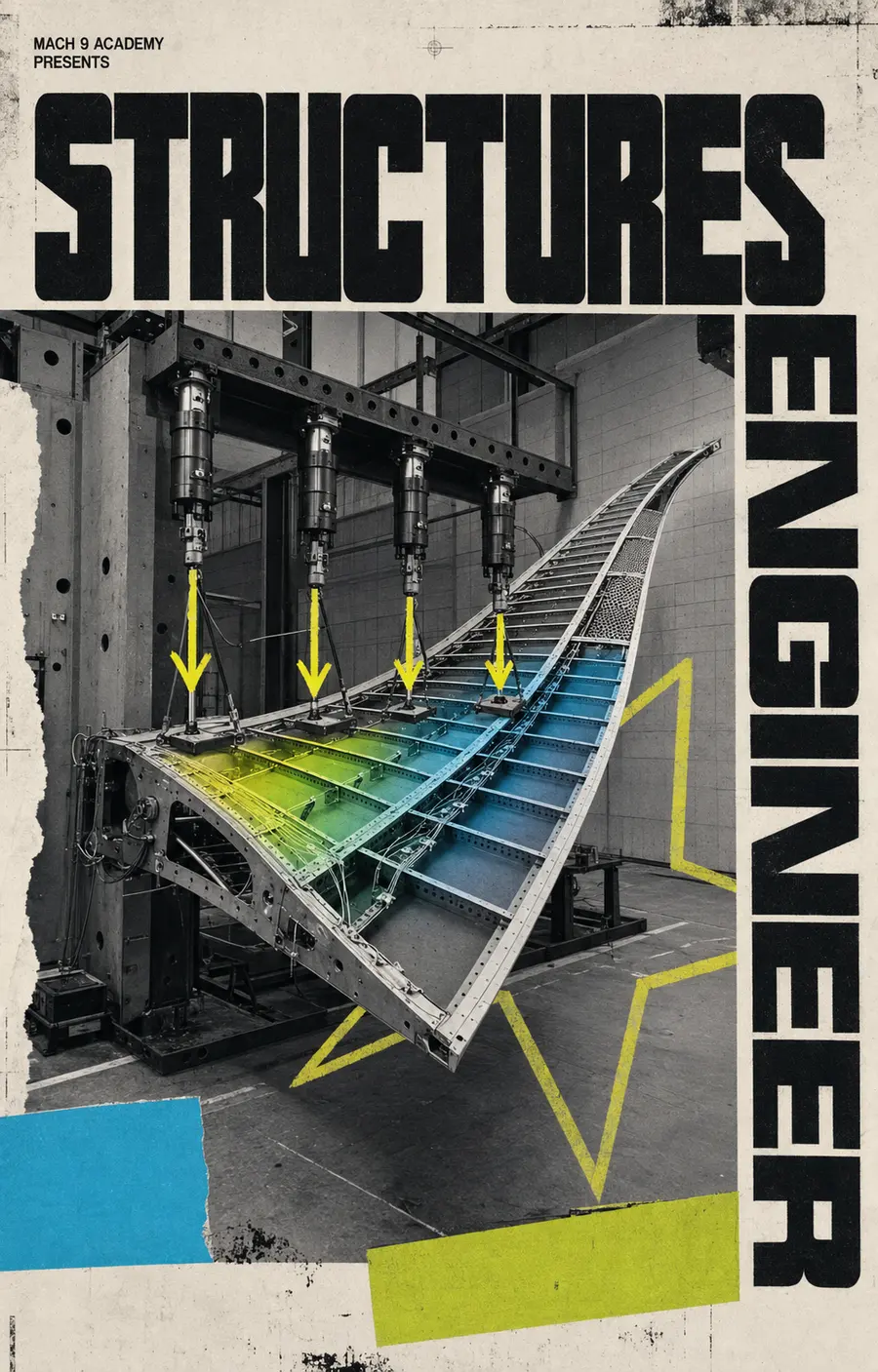
Designs the experiment that decides whether the analysis was right.

The work
Test engineers build the campaign: what gets measured, with what accuracy, in what order, and what result would count as a failure. It is the job where you find out what the hardware actually does rather than what the model predicted.
A typical day
- 01Specify instrumentation and data acquisition
- 02Write test procedures and safety cases
- 03Run the test and call it if limits are exceeded
- 04Turn raw channels into a defensible conclusion
How people get in
- Engineering degree
Any discipline; the specialism is learned on the rig.
- Technician route
Many excellent test engineers started as technicians and moved across.
How it unfolds
- DegreeEngineering, plus a tolerance for instrumentation and data.
- Years 1-3Rig building, instrumentation and running other people’s tests.
- Years 4-8Designing the campaign: what to measure, how, and what would count as a pass.
- LaterTest lead, or into certification.
Is there a job in it
- Employed now
- 68,700
- Projected change
- +8% by 2034
- Openings a year
- 3,800
Aerospace engineers · US Bureau of Labor Statistics, Occupational Outlook Handbook, May 2024 wages and 2024–34 projections.
Counted inside "aerospace engineers", along with every other engineering discipline that works on air and space vehicles. There is no separate published line for this specialism.
The hard parts
Tests run when the article is ready, which is often nights and weekends. A campaign can be undone by an instrumentation fault nobody noticed for a day. And your job is frequently to be the person who says the thing is not ready.
What you would need
- Instrumentation
- Signal processing
- Uncertainty analysis
- Calm under pressure
- Median pay
- $134,960
- Aerospace engineers, May 2024. US Bureau of Labor Statistics.
- Typical education
- Bachelor's in engineering, or technician route plus experience
- Routes in
- Degree, Apprenticeship, Military
- Field
- Engineering