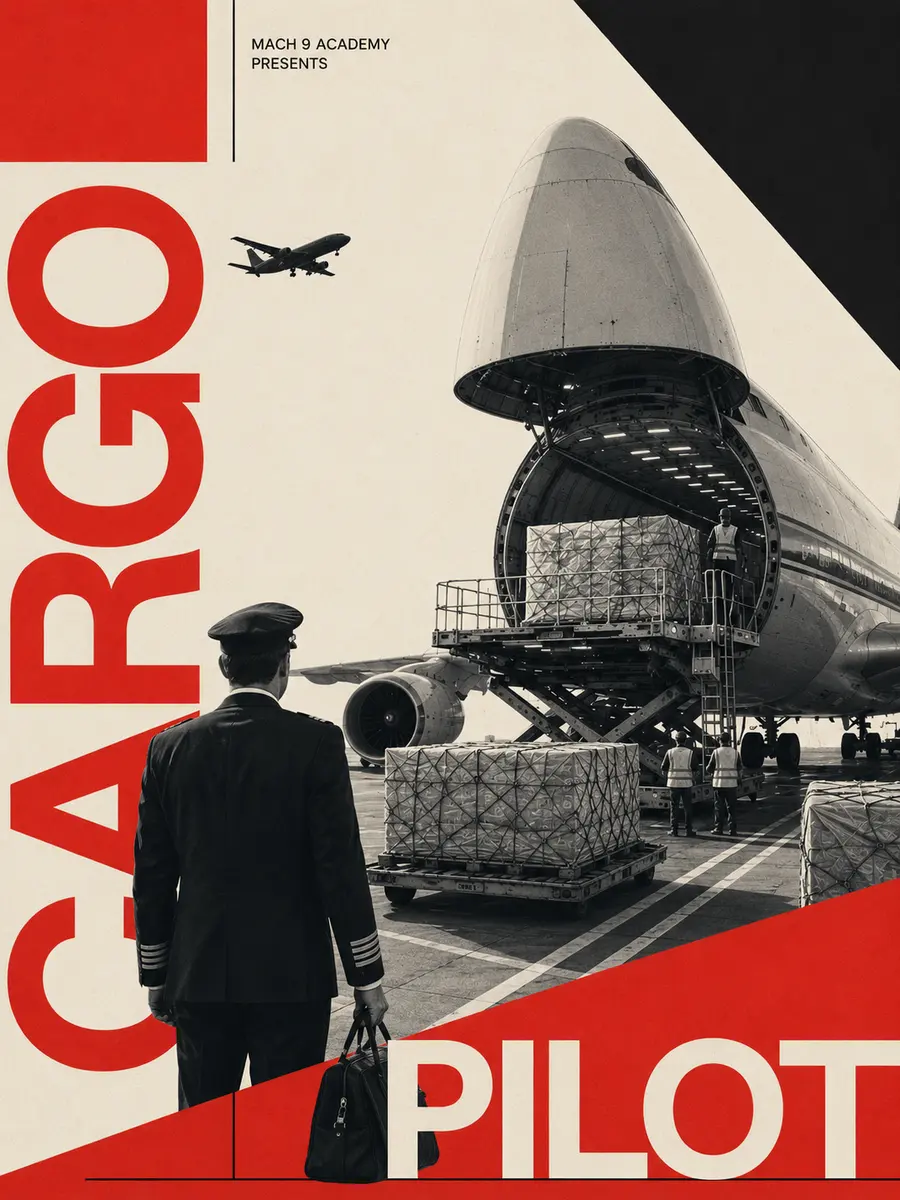
Moves freight, mostly overnight, to schedules nobody sees.
The work
The aircraft and the licences are the same as passenger flying; the working life is not. Freight runs at night, into airports that are quiet at three in the morning, on a body clock that has to be managed rather than fought. Loading matters more here than anywhere else in aviation, weight and balance is a live calculation with real consequences.
A typical day
- 01Night sectors, often several short legs back to back
- 02Check the load sheet and the centre of gravity before anything moves
- 03Fly into fields with fewer services and fewer people awake
- 04Manage fatigue deliberately, because the roster will not do it for you
How people get in
- The same licences
Identical to the passenger route. Many pilots move between the two more than once.
- Regional freight first
Single-pilot or light twin freight is a common way to build turbine hours quickly.
How it unfolds
- Year 1Light freight or a first officer seat, often single-pilot night operations on a piston twin.
- Years 2-6Turboprop or narrow-body freighter. The hours build faster here than almost anywhere.
- Years 7+Command, and often a move to wide-body long haul or to a passenger operator.
- LaterSome stay for the roster: freight tends to fly the same routes on the same nights.
Is there a job in it
- Employed now
- 154,900
- Projected change
- +7% by 2034
- Openings a year
- 16,400
Airline and commercial pilots · US Bureau of Labor Statistics, Occupational Outlook Handbook, May 2024 wages and 2024–34 projections.
The Handbook counts one occupation for every professional pilot in the country, so this figure covers airline, cargo, corporate, instructional and survey flying together. Pay in particular varies enormously inside it, a first-year regional first officer and a wide-body captain are both in this number.
The hard parts
You work when everyone else sleeps and sleep when everyone else works, and no amount of experience makes a body clock agree to that. Fields at three in the morning have fewer services, less traffic and nobody to ask. The flying is the same standard; the support around it is thinner.
What you would need
- Weight and balance
- Fatigue management
- Instrument flying
- Dangerous goods awareness
- Median pay
- $210,020
- Airline and commercial pilots, May 2024. US Bureau of Labor Statistics.
- Typical education
- Commercial licence, instrument rating and a type rating
- Routes in
- Licence or certification, Military
- Field
- Aviation