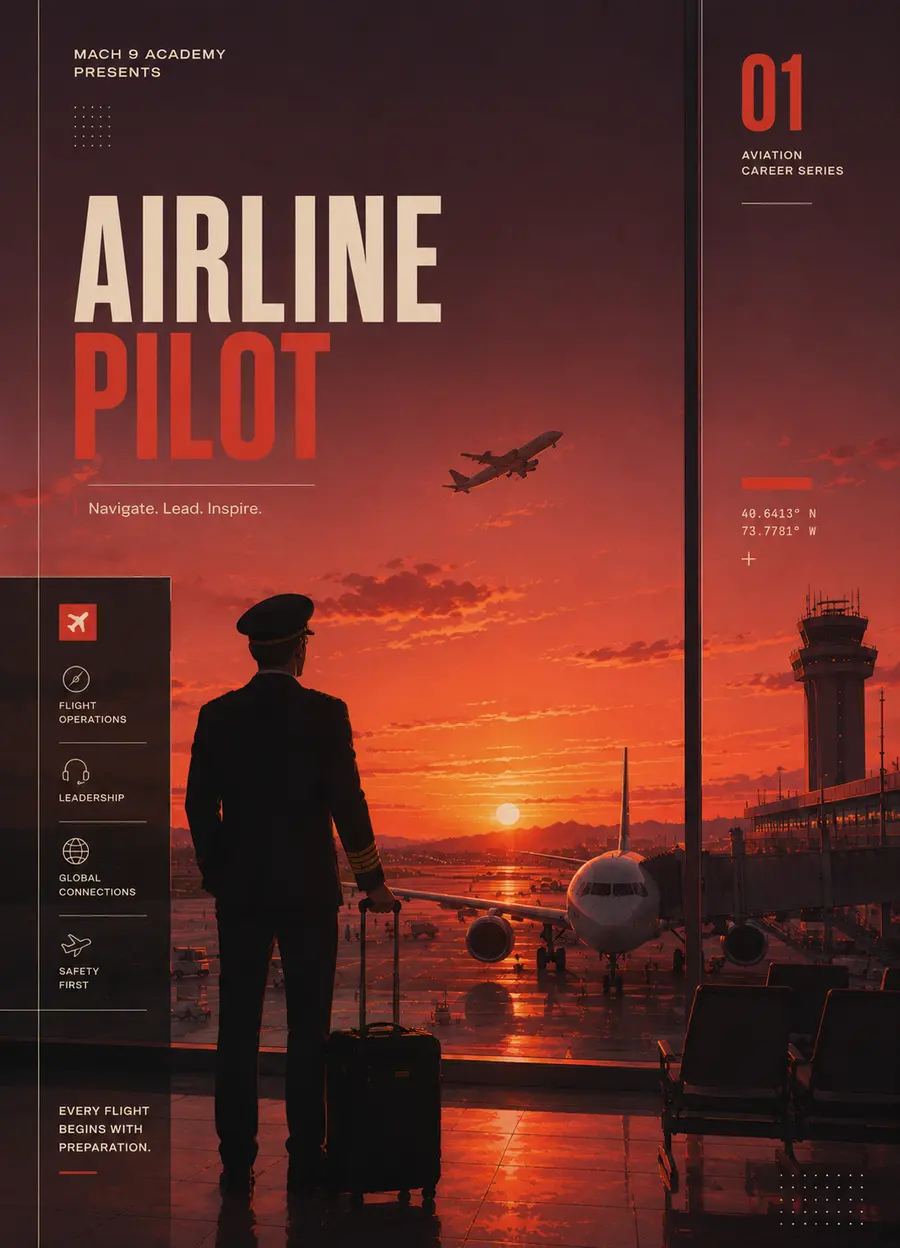
Flies scheduled passenger services as one half of a two-person crew.
The work
Line flying is systems management, planning and judgement, with a few minutes of manual handling at each end of a sector. Almost everything is proceduralised, and the procedures exist because somebody found out the hard way. Progression runs first officer to captain on seniority as much as on skill, and recurrent checks continue for the whole career.
A typical day
- 01Brief the sector: route, fuel, weather, alternates, minimum equipment
- 02Fly one leg, monitor the other, the roles swap every sector
- 03Manage a delay, a diversion or a technical fault with a checklist
- 04Simulator checks twice a year, for as long as you hold the licence
How people get in
- Integrated training
Full-time and expensive, roughly eighteen months from zero to a frozen airline transport licence. Check funding and cadet schemes before committing.
- Modular training
Licence by licence, paid as you go, usually alongside work. Slower, and far easier to stop and restart.
- Instructing hours
The common bridge. Teach for a couple of years, build the hours the airlines want, and apply from there.
How it unfolds
- Year 1Instructing or a first turboprop seat, building the hours an airline will look at.
- Years 2-5First officer on a jet. Line training, then a few hundred sectors learning the operation.
- Years 6-12Seniority decides almost everything from here: base, aircraft, roster, and when you can bid for a command.
- CommandLeft seat, and legal responsibility for the aircraft and everyone in it.
Is there a job in it
- Employed now
- 154,900
- Projected change
- +7% by 2034
- Openings a year
- 16,400
Airline and commercial pilots · US Bureau of Labor Statistics, Occupational Outlook Handbook, May 2024 wages and 2024–34 projections.
The Handbook counts one occupation for every professional pilot in the country, so this figure covers airline, cargo, corporate, instructional and survey flying together. Pay in particular varies enormously inside it, a first-year regional first officer and a wide-body captain are both in this number.
The hard parts
The training is expensive before anyone pays you, and the debt arrives years before the salary does. The roster runs your life: nights, early starts, weekends, and Christmases away in rotation. The medical is renewed every six or twelve months and losing it ends the career, which is why loss-of-licence insurance is not optional.
What you would need
- Crew resource management
- Systems knowledge
- Meteorology
- Standard operating procedures
- Median pay
- $210,020
- Airline and commercial pilots, May 2024. US Bureau of Labor Statistics.
- Typical education
- Commercial licence, instrument rating and a type rating
- Routes in
- Licence or certification, Military
- Field
- Aviation