Loading…
Careers · Engineering
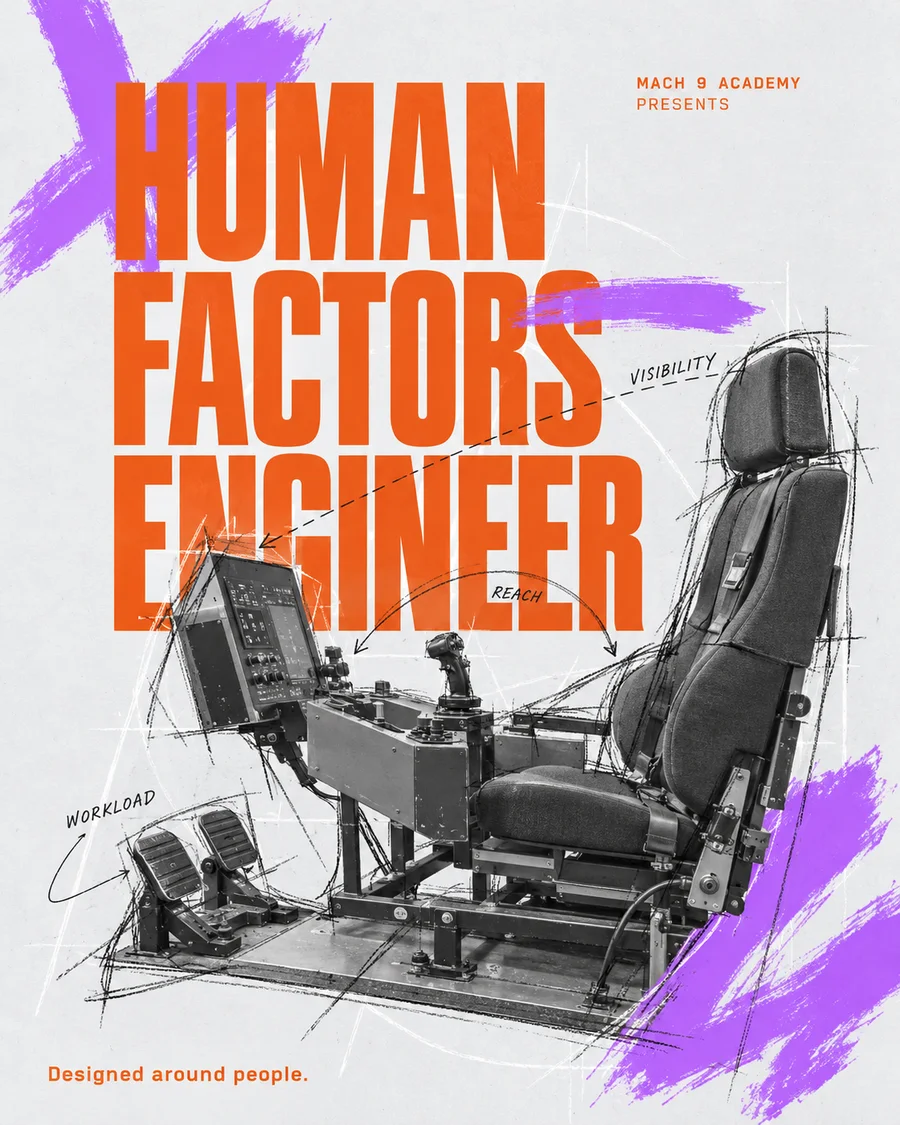
Designs the controls, displays and procedures around what a person under pressure will actually do.
The work
A cockpit, a control room and a maintenance procedure are all designed for a human operator who gets tired, misreads a similar-looking switch, and has a limited amount of attention to spend at any one moment. Human factors engineers study how people actually perceive, decide and act, then design the interface, the layout or the procedure so the likely human error is the safe one. Crew Resource Management, now standard across aviation, exists because this discipline eventually got taken seriously.
A typical day
- 01Observe real operators using an interface or procedure, not just review it on paper
- 02Analyse where a design invites a predictable human error
- 03Redesign a control, display or checklist around how people actually behave under load
- 04Write the human factors case that a safety review has to accept or challenge
How people get in
- Engineering or psychology degree, combined
The strongest candidates usually have a genuine grounding in both, through a joint programme or a master’s that bridges them.
How it unfolds
- DegreeEngineering, human factors or psychology, ideally combining both sides of the discipline.
- Years 1-3Usability studies and task analysis, watching real people use a real interface and fail in real ways.
- Years 4-8Owning the human factors case for a cockpit, control room or procedure, and defending it in review.
- LaterHuman factors lead, or into accident investigation.
Is there a job in it
- Employed now
- 365,100
- Projected change
- +12% by 2034
- Openings a year
- 23,100
Industrial Engineers · US Bureau of Labor Statistics, Occupational Outlook Handbook, May 2024 wages and 2024–34 projections.
The Handbook names "human factors engineers," who work to improve products and systems for the people using them, as one of the specialisms this occupation covers. It is the closest published match, bundled with every other industrial engineering specialism rather than broken out on its own.
The hard parts
The problem you are solving is invisible until someone gets it wrong, which means the case for good human factors design is always made after the fact, in an accident report, unless you make it well in advance instead. Getting a design changed on human factors grounds means arguing against engineers who are certain their interface is clear, because to them, having designed it, it is.
What you would need
- Cognitive and perceptual psychology
- Task analysis
- Usability testing
- Writing a persuasive safety case
- Median pay
- $102,440
- Industrial Engineers, May 2024. US Bureau of Labor Statistics.
- Typical education
- Bachelor's in engineering, human factors or psychology, often with a related master's
- Routes in
- Degree
- Field
- Engineering