Loading…
Careers · Technology
Decides what a screen should do before anyone writes the code that does it.
The work
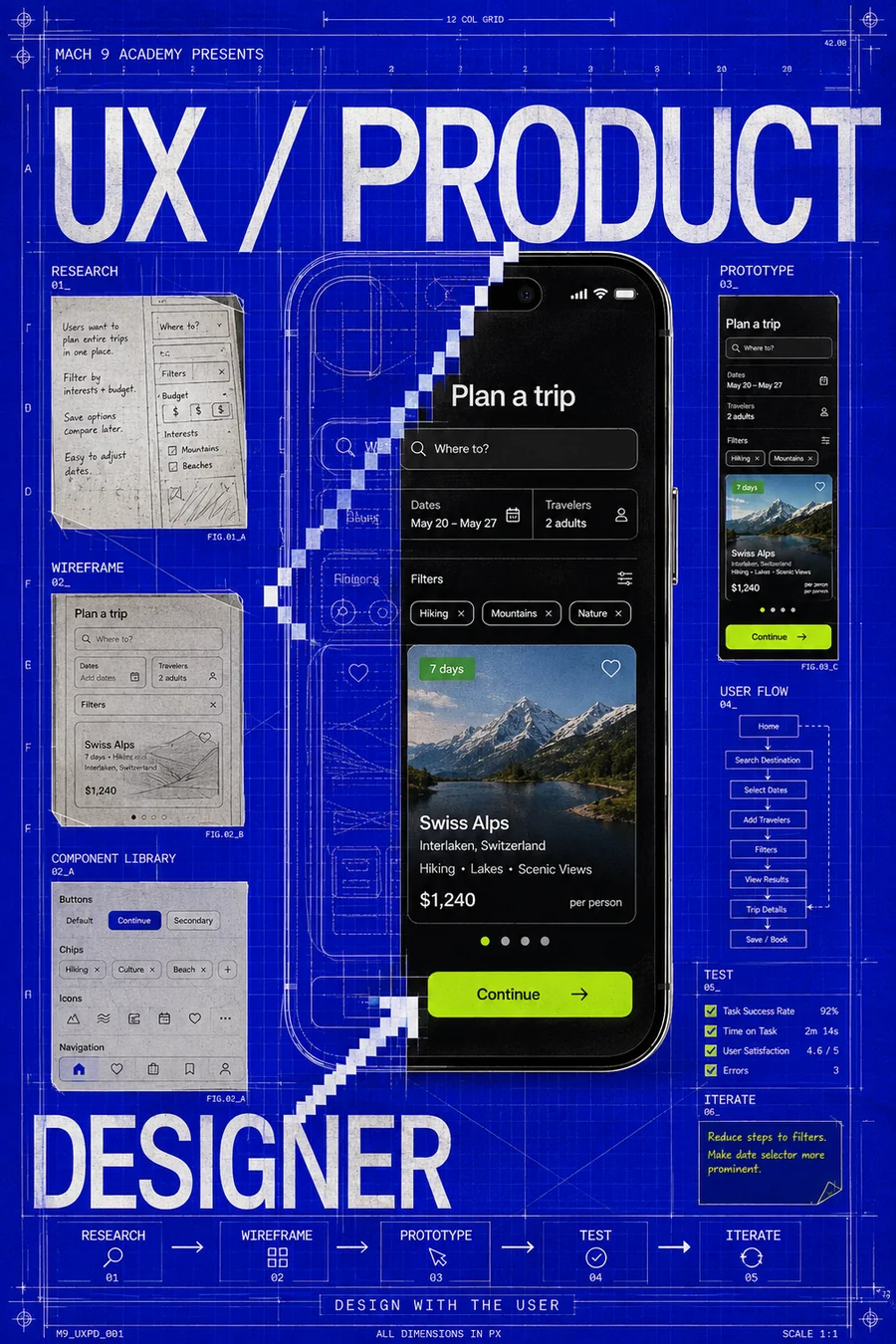
A UX designer’s job is not the pretty layer on top of a finished product, it is deciding what the product should even do, based on watching real people try to use it and fail. The best ones spend more time in research and iteration than in the design tool, because the interface only gets good once you have watched it go wrong a few times.
A typical day
- 01Run or review usability research on a real feature
- 02Turn findings into wireframes and then working prototypes
- 03Defend or revise a design against engineering constraints
- 04Maintain consistency with an existing design system
How people get in
- Design or HCI degree
Human-computer interaction programmes specifically teach the research half most bootcamps skip.
- Bootcamp plus portfolio
Faster and cheaper, and works if the portfolio shows real research and iteration, not just polished mockups.
How it unfolds
- Degree or portfolioDesign, HCI or a bootcamp, proven with real case studies rather than credentials alone.
- Years 1-3Junior designer, working from an existing design system on well-scoped features.
- Years 4-8Owning a product area’s whole experience, research included.
- LaterDesign lead, or into product management.
Is there a job in it
- Employed now
- 220,100
- Projected change
- +5% by 2034
- Openings a year
- 13,600
Web developers and digital designers · US Bureau of Labor Statistics, Occupational Outlook Handbook, May 2024 wages and 2024–34 projections.
The Handbook groups digital interface designers with web developers rather than tracking UX/product design on its own; the figure here is the digital-design half of that combined occupation.
The hard parts
A design almost never survives contact with real engineering and business constraints unchanged, and defending a decision with research instead of taste is a skill that takes years. The field also does not have a licensing gate the way engineering does, which means the bar for what counts as "designer" varies enormously between employers.
What you would need
- User research
- Prototyping tools
- Information architecture
- Presenting to non-designers
- Median pay
- $104,000
- Web developers and digital designers, May 2024. US Bureau of Labor Statistics.
- Typical education
- Bachelor's in design, HCI or a related field, or a portfolio built through bootcamp or self-study
- Routes in
- Degree, Licence or certification
- Field
- Technology