Builds the antennas, networks and software that talk to spacecraft.
The work
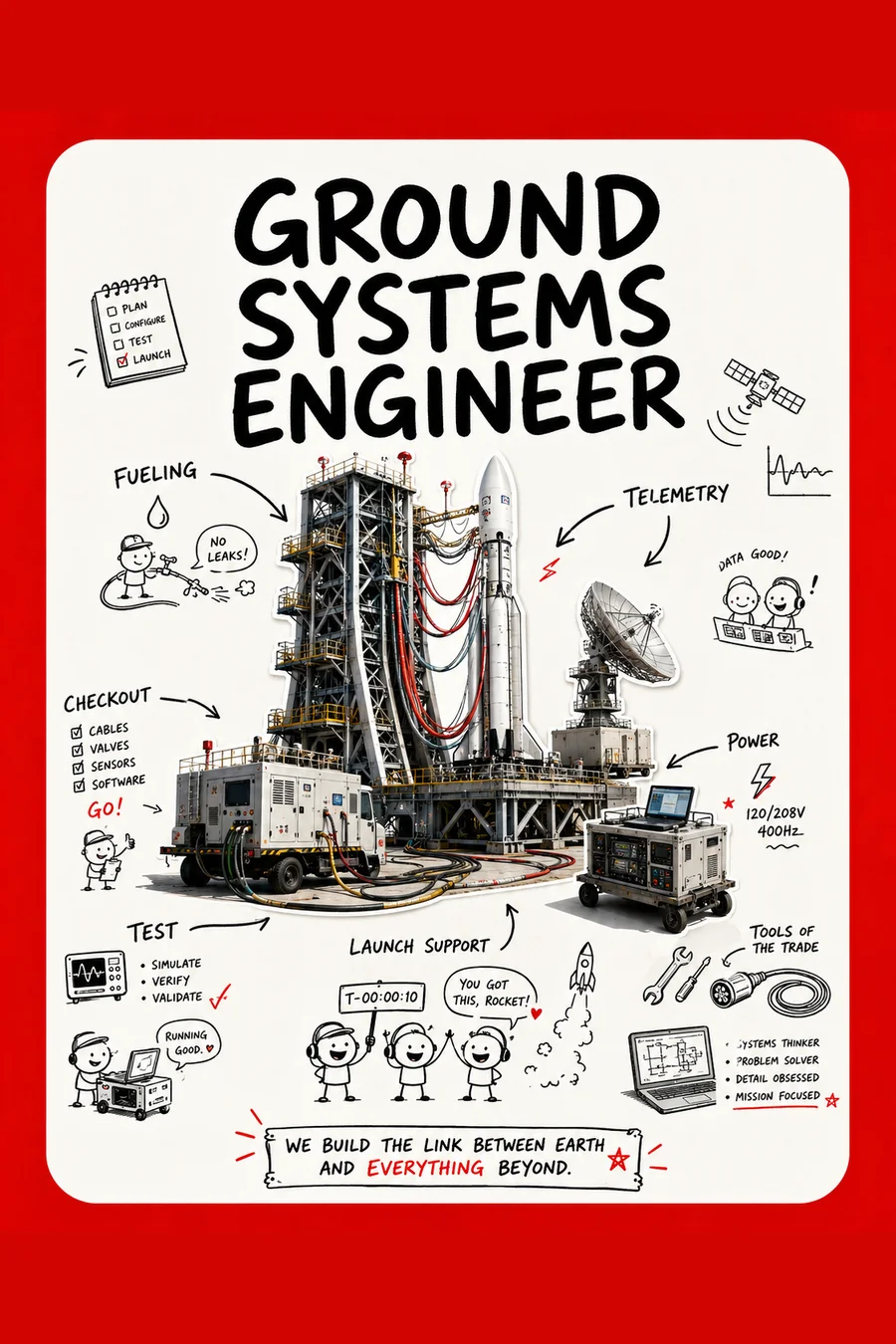
Every command and every byte of telemetry passes through the ground segment. Ground systems engineers own the stations, the scheduling, the links and the software that turns a radio signal into something an operator can read.
A typical day
- 01Configure and maintain ground station equipment
- 02Schedule passes across a network of antennas
- 03Develop telemetry processing and display software
- 04Support launch campaigns from the ground segment side
How people get in
- Engineering or CS degree
RF, networks or software emphasis all work.
- Technician route
Station maintenance is a genuine entry point with progression into engineering.
How it unfolds
- DegreeSoftware, electronics or systems engineering.
- Years 1-3Building and testing parts of the ground segment: antennas, servers, interfaces.
- Years 4-8Owning a segment, and being on call when a pass is missed.
- LaterGround segment architect.
Is there a job in it
- Employed now
- 1,905,400
- Projected change
- +10% by 2034
- Openings a year
- 106,100
Software developers, quality assurance analysts, and testers · US Bureau of Labor Statistics, Occupational Outlook Handbook, May 2024 wages and 2024–34 projections.
Ground segment work spans software and electronics; the software occupation is the nearest published fit and covers a vastly larger population than space ground systems.
The hard parts
Nobody notices the ground segment until a pass fails, and then everybody does. The systems are long-lived, which means maintaining software older than some of the people using it.
What you would need
- RF fundamentals
- Networking
- Software
- Systems integration
- Median pay
- $134,040
- Software developers, quality assurance analysts, and testers, May 2024. US Bureau of Labor Statistics.
- Typical education
- Bachelor's in engineering or computer science, or technician route
- Routes in
- Degree, Apprenticeship
- Field
- Space