Loading…
Careers · Aerospace
Builds, plumbs and runs the stands that put rocket and jet engines through fire.

The work
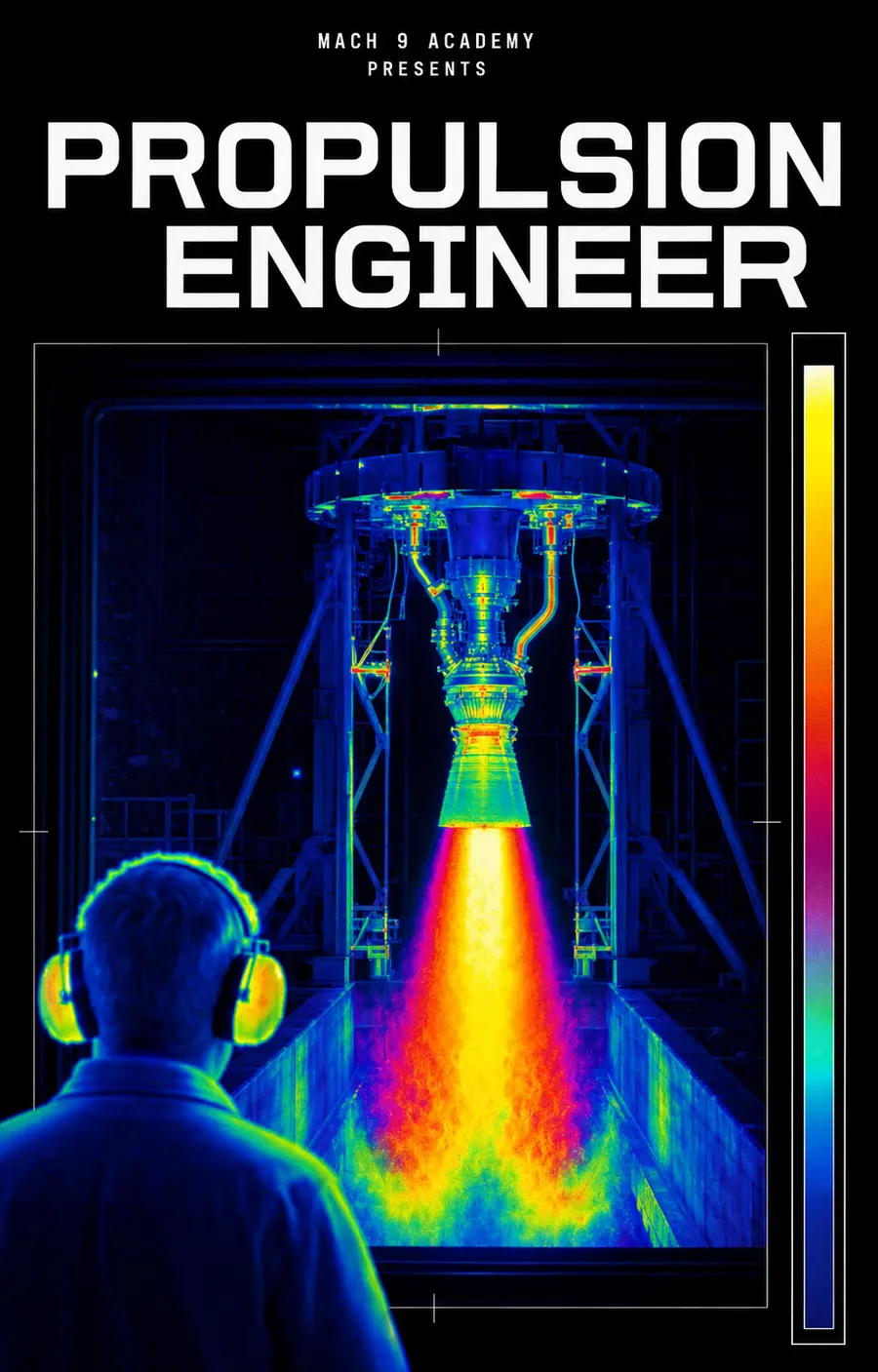
A hot fire test is a controlled explosion that somebody has to set up correctly every single time: propellant lines, valves, igniters, and the instrumentation that records what actually happened in the few seconds it happens in. Propulsion test technicians build and operate the test stand itself, working with cryogenic and often toxic propellants under procedures written because people found out the hard way what happens without them.
A typical day
- 01Plumb and pressure-test propellant and gas lines
- 02Install instrumentation and verify it before a hot fire
- 03Run the test sequence and monitor limits in real time
- 04Safe the stand and inspect hardware after every test
How people get in
- Technical training plus certification
Hazardous materials and cryogenics certifications matter as much as the base technical qualification.
- Military propulsion or ordnance background
Experience with fuels, pressurised systems or explosives converts directly, and several employers actively recruit it.
How it unfolds
- TrainingTechnical training plus hazardous materials and cryogenics certification specific to the propellants used.
- Years 1-3Stand crew: plumbing, valve work and instrumentation under a test conductor.
- Years 4-8Test conductor or stand lead, running the countdown and calling abort criteria.
- LaterTest facility manager, or across into propulsion engineering with the hands-on credibility to match.
Is there a job in it
- Employed now
- 11,600
- Projected change
- +12% by 2034
- Openings a year
- 1,100
Aerospace Engineering and Operations Technologists and Technicians · US Bureau of Labor Statistics, Occupational Outlook Handbook, May 2024 wages and 2024–34 projections.
The Handbook’s technician occupation spans every aerospace specialism, structures, avionics, propulsion, together. Test-stand and propellant work specifically is not broken out, and typically pays a premium over the average for the hazard involved.
The hard parts
The propellants are frequently cryogenic, sometimes toxic, and the whole point of the job is being close to something built to release enormous energy on command. Tests run on the article’s schedule, which means odd hours, and a scrub the night before a test can cost a programme weeks. The procedures are strict because the alternative to strict procedures has already happened to someone, somewhere.
What you would need
- Propellant handling
- Cryogenics safety
- Instrumentation
- Procedure discipline
- Median pay
- $82,890
- Aerospace Engineering and Operations Technologists and Technicians, May 2024. US Bureau of Labor Statistics.
- Typical education
- Associate's degree or technical training, often with hazardous materials certification
- Routes in
- Apprenticeship, Licence or certification
- Field
- Aerospace