Loading…
Careers · Technology
Builds machines that sense and act in the physical world, on the ground rather than in it.
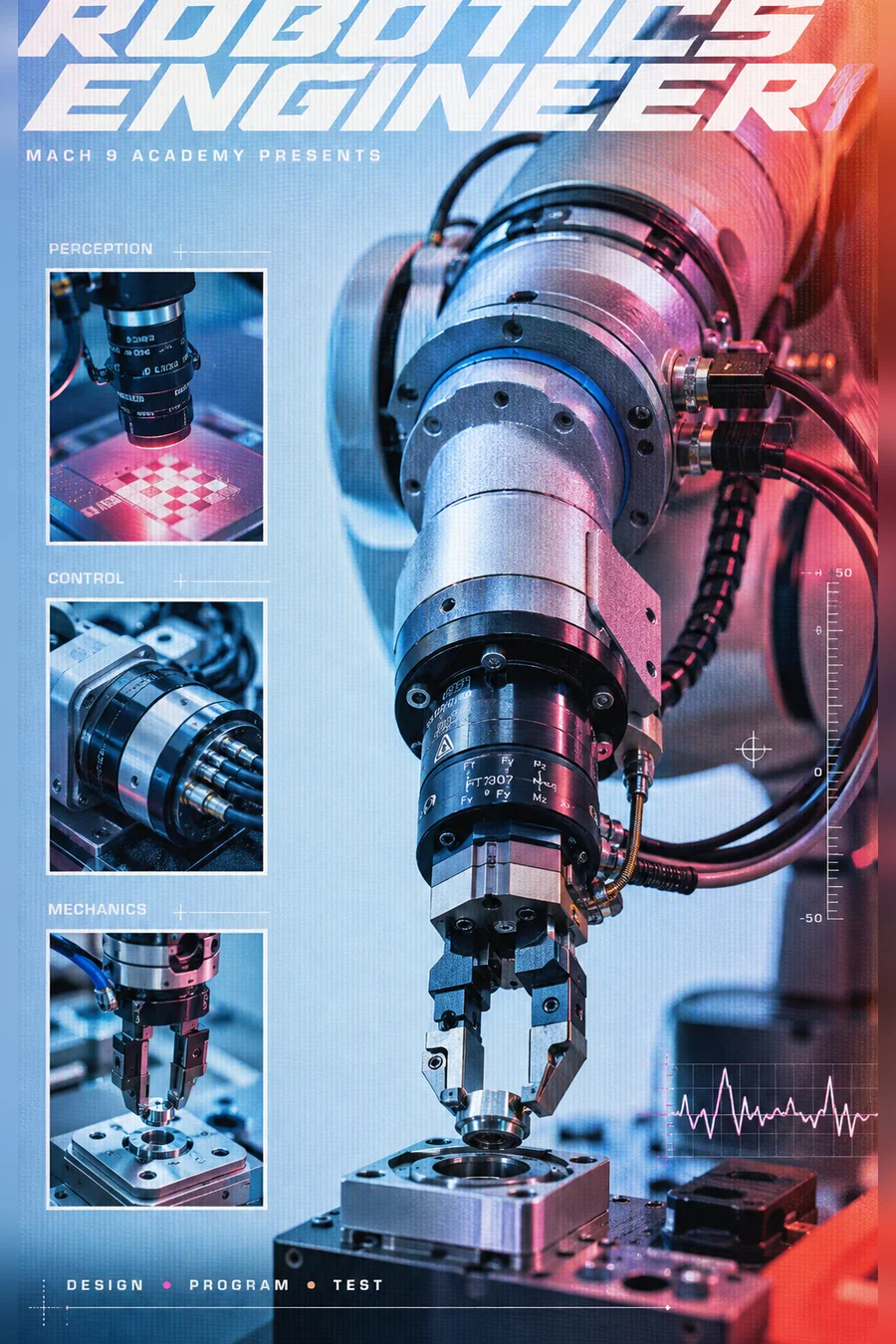
The work
Robotics sits at the join of mechanical, electrical and software engineering: a warehouse picking arm, a surgical robot and a self-driving delivery cart are different problems that all need someone who can move between hardware and the code that controls it. It is not a separately tracked occupation in its own right, most robotics engineers are hired as mechanical or electrical engineers who specialised.
A typical day
- 01Design or refine a mechanical or control subsystem
- 02Test on physical hardware, not just simulation
- 03Debug a failure that only appears on the real robot
- 04Work across the mechanical, electrical and software teams
How people get in
- Mechanical or electrical engineering degree
The standard entry; a robotics concentration or club project makes the application stand out.
How it unfolds
- DegreeMechanical, electrical or a dedicated robotics programme, ideally with a real robot built during it.
- Years 1-3Working one layer of a robotic system (perception, control or mechanical design) under someone senior.
- Years 4-8Owning a subsystem end to end: designing it, building it, and making it work in the real world.
- LaterLead engineer on a robotic platform, or into research.
Is there a job in it
- Employed now
- 298,500
- Projected change
- +11% by 2034
- Openings a year
- 17,800
Mechanical engineers · US Bureau of Labor Statistics, Occupational Outlook Handbook, May 2024 wages and 2024–34 projections.
The Handbook does not track robotics engineering as its own occupation; most robotics roles are filled by mechanical or electrical engineers, and this is the closer of the two.
The hard parts
Hardware fails in ways software never does, a robot that works perfectly in simulation can fall over the first time it meets a real floor, and debugging happens on physical prototypes that take real time and money to fix. The field is also genuinely interdisciplinary, which means constantly working at the edge of what you know rather than deep in one specialty.
What you would need
- CAD and mechanical design
- Control systems
- Embedded programming
- Cross-discipline communication
- Median pay
- $104,110
- Mechanical engineers, May 2024. US Bureau of Labor Statistics.
- Typical education
- Bachelor's in mechanical, electrical or robotics engineering
- Routes in
- Degree
- Field
- Technology