Loading…
Careers · Technology
Builds the digital vehicle everyone else tests against before the real one exists.
The work
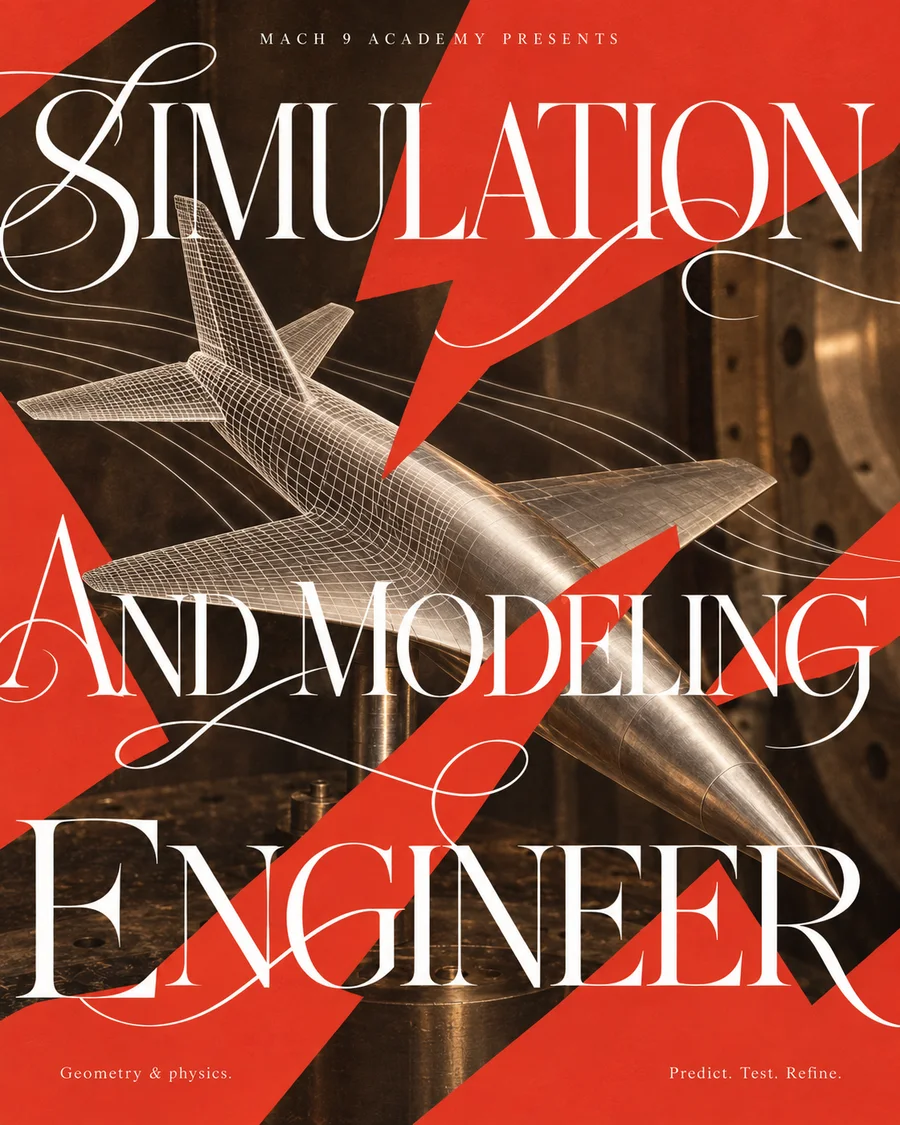
Long before a vehicle flies, it flies thousands of times inside a simulation: a model of its dynamics, its sensors and its environment, run in software and eventually on real flight hardware wired into a rig that cannot tell the difference. Simulation and modelling engineers build and maintain that infrastructure, the physics models, the hardware-in-the-loop rigs, the fidelity that makes a simulated failure worth taking seriously, so every other engineering team has somewhere honest to test.
A typical day
- 01Build and validate physics models of vehicle dynamics, sensors and environment
- 02Maintain hardware-in-the-loop rigs that run real flight software against a simulated vehicle
- 03Correlate simulation results against real test or flight data
- 04Support other engineering teams running their own test campaigns against the model
How people get in
- Engineering, CS or physics degree
Strong programming ability combined with real physics or dynamics knowledge is the actual bar, whichever department it came from.
How it unfolds
- DegreeEngineering, computer science or physics, with real numerical methods and software engineering both.
- Years 1-3Building and validating individual models: a sensor, an actuator, a piece of the environment.
- Years 4-8Owning the simulation architecture a whole programme designs and tests against.
- LaterSimulation lead, or into flight software or GNC with an unusually strong grip on the vehicle model.
Is there a job in it
- Employed now
- 1,905,400
- Projected change
- +10% by 2034
- Openings a year
- 106,100
Software Developers, Quality Assurance Analysts, and Testers · US Bureau of Labor Statistics, Occupational Outlook Handbook, May 2024 wages and 2024–34 projections.
The nearest published occupation. Simulation and modelling engineering, physics-based vehicle and sensor models rather than general application software, is a small and specific slice of an occupation of nearly two million people.
The hard parts
A simulation is only useful if people trust it, and trust erodes fast the first time a model misses something the real hardware does. Hardware-in-the-loop rigs are complex systems in their own right, and keeping one running and credible, in sync with a vehicle design that keeps changing, is a permanent, unglamorous maintenance job most people only notice when it breaks.
What you would need
- Numerical methods
- Software engineering
- Systems modelling
- Real-time systems
- Median pay
- $134,040
- Software Developers, Quality Assurance Analysts, and Testers, May 2024. US Bureau of Labor Statistics.
- Typical education
- Bachelor's in engineering, computer science or physics
- Routes in
- Degree
- Field
- Technology