Loading…
Careers · Aerospace
Designs the material that stands between a vehicle and the heat of going fast.
The work
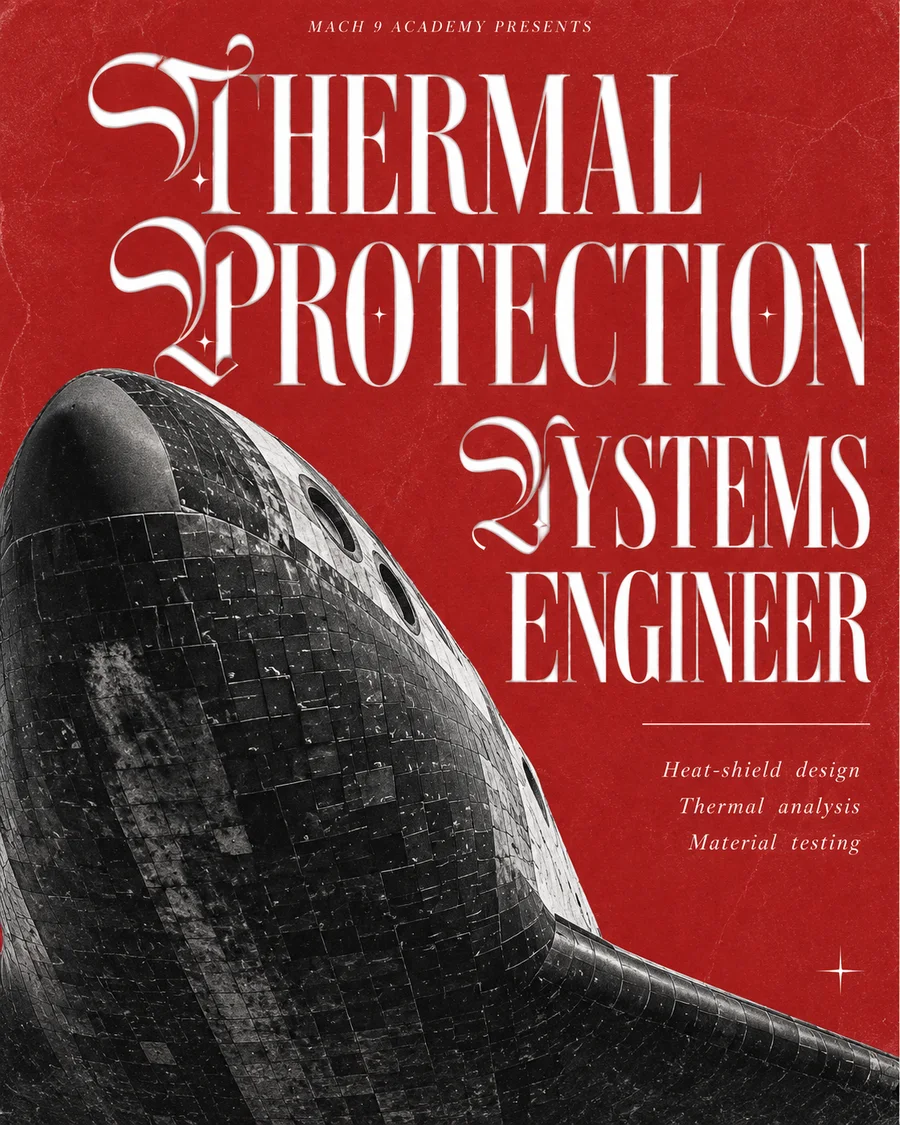
Above a few times the speed of sound, air compresses against the front of a vehicle hard enough to heat it to thousands of degrees, hot enough to melt or vaporise most structural metals. A thermal protection engineer chooses and qualifies what carries that heat instead: ablative material that chars and sacrifices itself, tile that radiates the heat back out, or an active system that cools the structure with flowing fluid. The choice depends on how hot, for how long, and how many times the vehicle has to fly.
A typical day
- 01Model heat flux and temperature response along a trajectory
- 02Test candidate materials in arc-jet or plasma facilities
- 03Size tile or ablator thickness against a margin, not a guess
- 04Inspect returned hardware and correlate it against the prediction
How people get in
- Aerospace or materials degree
Either works. What matters more is a genuine grounding in heat transfer, which not every programme teaches deeply.
How it unfolds
- DegreeAerospace engineering or materials science, with heat transfer and materials courses taken seriously.
- Years 1-3Arc-jet and plasma torch testing, characterising how a candidate material actually chars or ablates.
- Years 4-8Sizing and qualifying a thermal protection system for a specific trajectory and vehicle.
- LaterThermal protection lead, or into materials development for the next generation of the problem.
Is there a job in it
- Employed now
- 23,800
- Projected change
- +8% by 2034
- Openings a year
- 1,300
Materials engineers · US Bureau of Labor Statistics, Occupational Outlook Handbook, May 2024 wages and 2024–34 projections.
Materials engineers as a whole, covering every material specialism from biomedical implants to semiconductors. Thermal protection is a small, specialised corner of it, closer in practice to aerospace engineering than to most of what this figure counts.
The hard parts
You cannot fully test the real condition on the ground: an arc-jet or plasma torch approximates the heating, it does not reproduce it, so a margin of genuine uncertainty rides along on every flight. The material is often destroyed by design, which means a good flight looks identical to a slightly-too-conservative one, and the only way to know you had margin to spare is analysis you cannot fully verify until the vehicle comes back, if it comes back at all.
What you would need
- Heat transfer
- Materials characterisation
- High-temperature testing
- Trajectory analysis
- Median pay
- $112,860
- Materials engineers, May 2024. US Bureau of Labor Statistics.
- Typical education
- Bachelor's or Master's in aerospace engineering or materials science
- Routes in
- Degree
- Field
- Aerospace