Loading…
Careers · Technology
Watches for the break-in, and builds the systems that make one harder.
The work
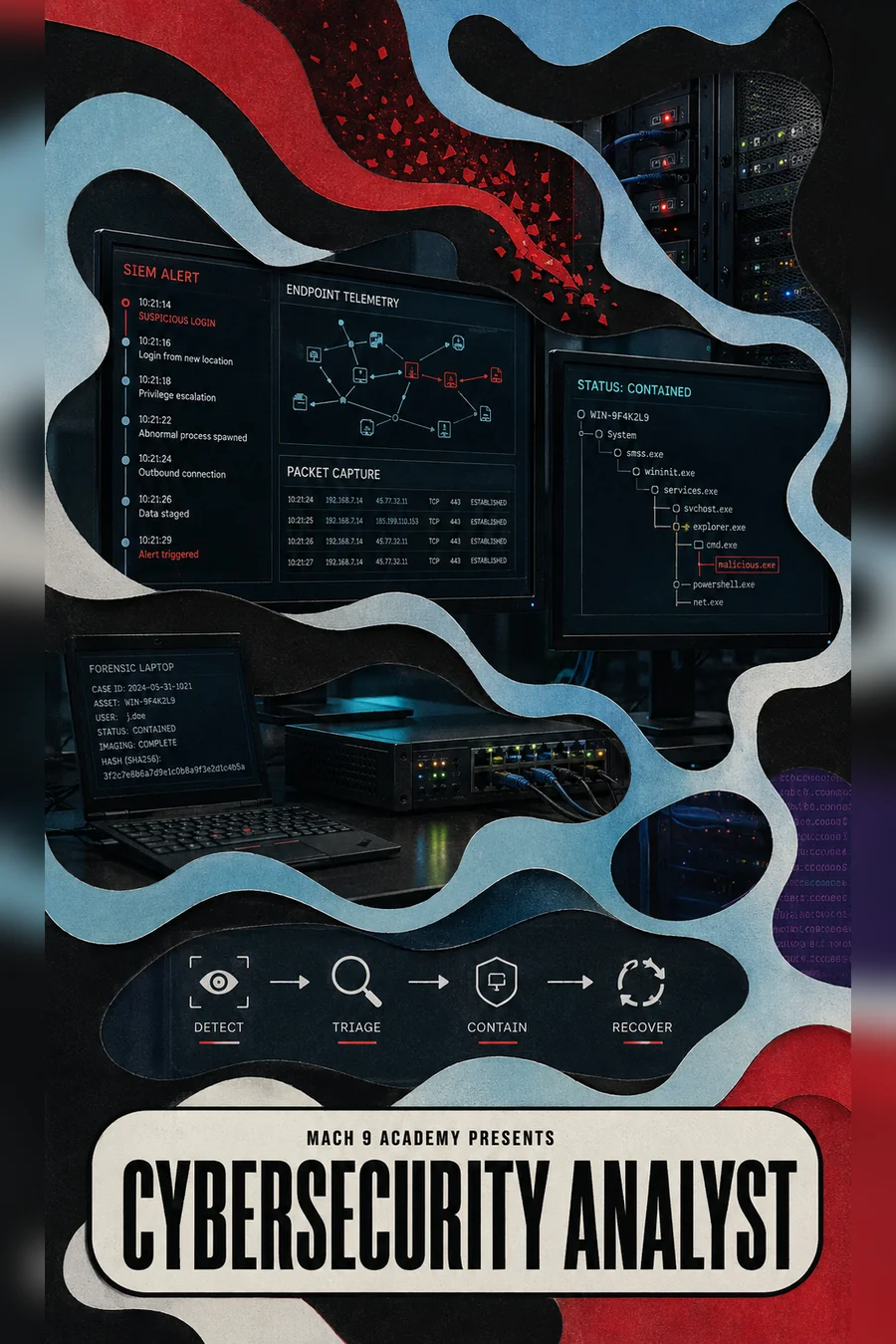
Every organisation with a network is a target, and cybersecurity analysts are the people who monitor for intrusion, investigate when something looks wrong, and close the gaps before someone else finds them first. It is one of the fastest-growing technology occupations the Bureau of Labor Statistics tracks, for a plain reason: the number of things worth attacking keeps growing faster than the number of people defending them.
A typical day
- 01Monitor security alerts and triage what is real
- 02Investigate and document suspected intrusions
- 03Run vulnerability scans and push fixes through the backlog
- 04Write the incident report afterward, regardless of outcome
How people get in
- Computer science degree
The standard route into a first analyst role at a mid-size or large employer.
- IT support plus certification
A common lateral path: start in general IT, add Security+ or equivalent, move into security specifically.
How it unfolds
- DegreeComputer science or information security, plus an entry certification such as Security+.
- Years 1-3Security operations centre analyst: monitoring alerts, triaging, learning what normal traffic looks like.
- Years 4-8Incident response or penetration testing, actively hunting problems rather than watching for them.
- LaterSecurity architect, or CISO track.
Is there a job in it
- Employed now
- 192,900
- Projected change
- +21% by 2034
- Openings a year
- 14,100
Information security analysts · US Bureau of Labor Statistics, Occupational Outlook Handbook, May 2024 wages and 2024–34 projections.
The hard parts
You are measured by absence, a good year looks like nothing happened, which is a hard thing to point to in a review. The job also runs on-call: a real incident does not wait for business hours, and the first response is usually yours.
What you would need
- Networking fundamentals
- A scripting language
- Threat analysis
- Clear incident writing
- Median pay
- $129,180
- Information security analysts, May 2024. US Bureau of Labor Statistics.
- Typical education
- Bachelor's in computer science or a related field, plus security certifications
- Routes in
- Degree, Licence or certification
- Field
- Technology