Loading…
Careers · Technology
Designs the sensor and avionics hardware, not the software running on it.
The work
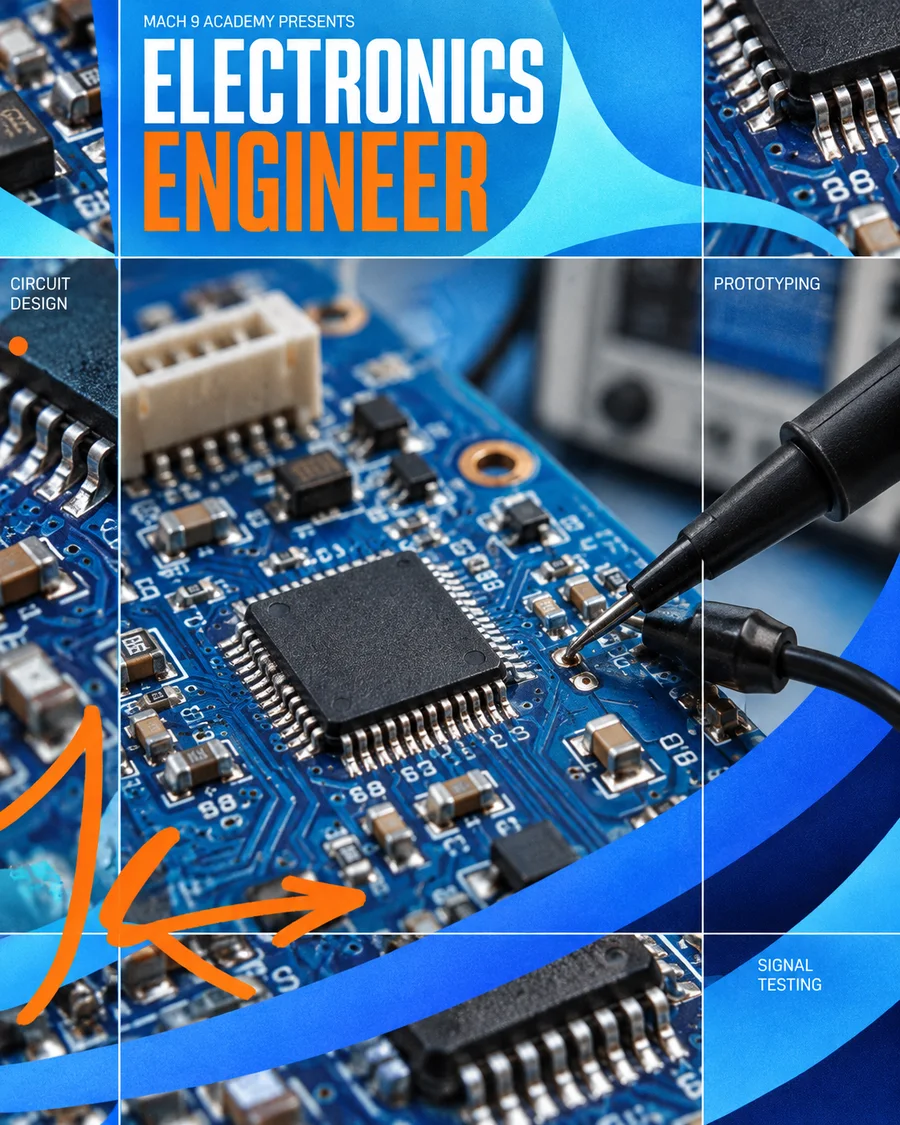
Before a flight computer can fuse an inertial measurement with a GPS fix, something has to design the actual circuit boards: the sensor front-ends, the signal conditioning, the radios, the boards that turn a physical signal into a number the software can use. Electronics engineers design and test that hardware, working closely with the software side but responsible for a different set of problems entirely, noise, power, thermal and electromagnetic interference among them.
A typical day
- 01Design and simulate sensor and avionics circuits
- 02Build and test prototype hardware on the bench
- 03Diagnose noise, power or interference problems in a working design
- 04Support certification and environmental testing
How people get in
- Electrical or electronics engineering degree
The standard route. Real hands-on board design experience, in a lab or a club project, stands out.
How it unfolds
- DegreeElectrical or electronics engineering, with real circuit design and signal processing coursework.
- Years 1-3Board-level design and test under a senior engineer, learning why the datasheet is never quite the whole story.
- Years 4-8Owning a sensor or avionics board from schematic through certification testing.
- LaterHardware lead, or across into systems engineering.
Is there a job in it
- Employed now
- 297,900
- Projected change
- +8% by 2034
- Openings a year
- 16,300
Electrical and Electronics Engineers · US Bureau of Labor Statistics, Occupational Outlook Handbook, May 2024 wages and 2024–34 projections.
Electronics engineers specifically (a sub-line inside this figure) report a $130,220 median. Avionics and sensor hardware is one specialism inside a broad occupation that spans consumer electronics, industrial controls and telecoms alike, and is a genuinely different job from the avionics technician who installs and repairs the hardware after it is built.
The hard parts
A board that works on the bench can still fail in flight, from vibration, temperature extremes or electromagnetic interference nobody reproduced in the lab, and finding that failure after the fact is slow, careful detective work. Certification testing for flight hardware is exacting and unforgiving of shortcuts, and a redesign this late costs real schedule.
What you would need
- Circuit design
- Signal processing
- Electromagnetic compatibility
- Test and measurement
- Median pay
- $125,040
- Electrical and Electronics Engineers, May 2024. US Bureau of Labor Statistics.
- Typical education
- Bachelor's in electrical or electronics engineering
- Routes in
- Degree
- Field
- Technology