Loading…
Careers · Space
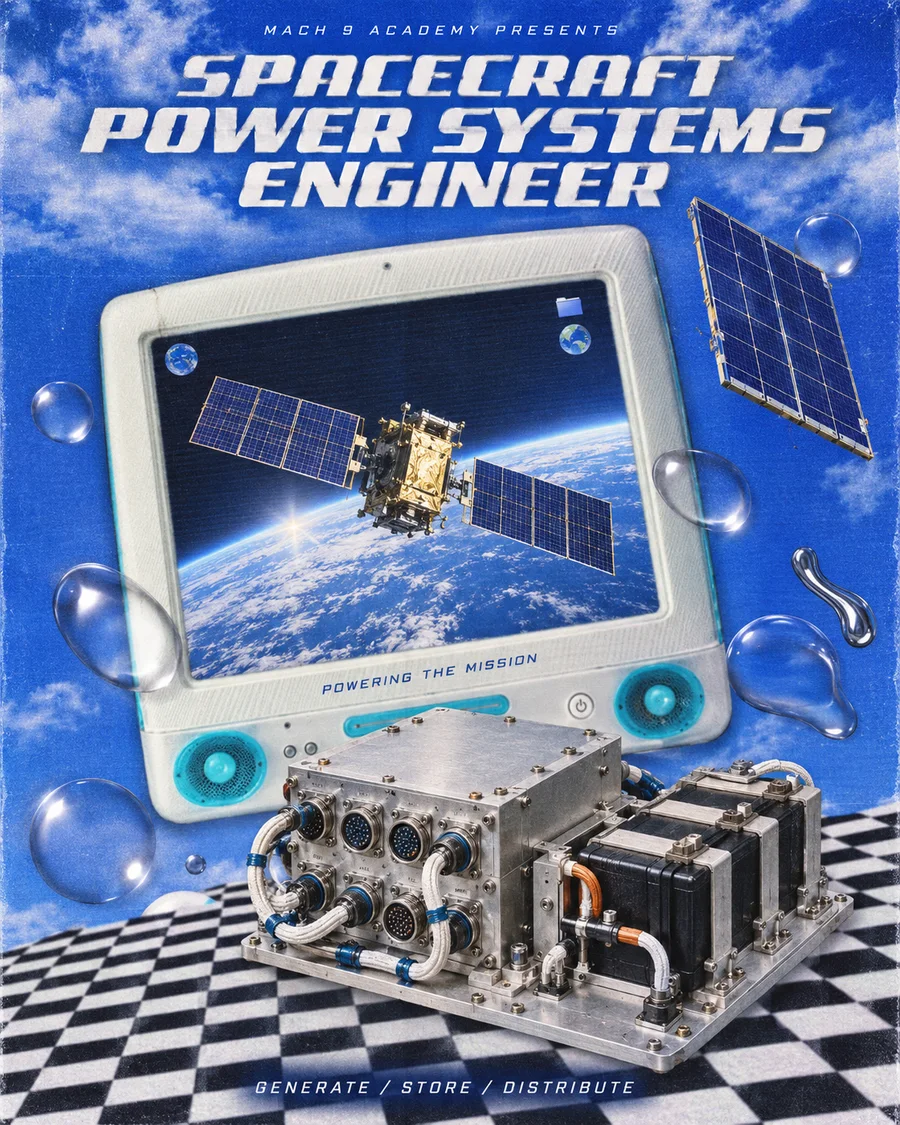
Keeps a spacecraft supplied with electricity for a mission that has no wall socket.
The work
Everything on a spacecraft runs on power that has to be generated, stored and distributed with no possibility of a refuelling stop. Power engineers size the solar arrays against how much sunlight the orbit actually gives (which changes, sometimes to zero during an eclipse), size the batteries to cover the gaps, and build the electrical distribution and fault protection that keeps one bad short from taking down the whole vehicle.
A typical day
- 01Model solar array output across the orbit, including eclipse seasons
- 02Size batteries and track their degradation across the mission life
- 03Design and test power distribution and fault protection circuits
- 04Hold the power budget and arbitrate who gets what
How people get in
- Electrical or aerospace engineering degree
A power electronics or energy systems emphasis is the most direct route in.
How it unfolds
- DegreeElectrical or aerospace engineering, with power electronics taken seriously.
- Years 1-3Analysis and test support: battery characterisation, solar array modelling, power budget tracking.
- Years 4-8Owning the power subsystem for a spacecraft, from architecture through to launch.
- LaterPower subsystem lead across a programme, or into spacecraft systems engineering.
Is there a job in it
- Employed now
- 297,900
- Projected change
- +8% by 2034
- Openings a year
- 16,300
Electrical and Electronics Engineers · US Bureau of Labor Statistics, Occupational Outlook Handbook, May 2024 wages and 2024–34 projections.
Electrical engineers as a whole, across power grids, consumer electronics and everything between. Spacecraft power, with its own constraints of eclipse cycles, radiation and zero maintenance access, is a small specialism inside it.
The hard parts
The power budget is a hard constraint that every other subsystem wants more of, and running out of it in orbit is not something you can fix with a site visit. Batteries degrade with every eclipse cycle over a mission that can run a decade or more, and the margin you designed in at launch is the margin the whole spacecraft is quietly spending down.
What you would need
- Power electronics
- Battery and solar array modelling
- Circuit design
- Fault protection
- Median pay
- $125,040
- Electrical and Electronics Engineers, May 2024. US Bureau of Labor Statistics.
- Typical education
- Bachelor's or Master's in electrical or aerospace engineering
- Routes in
- Degree
- Field
- Space